What It Costs
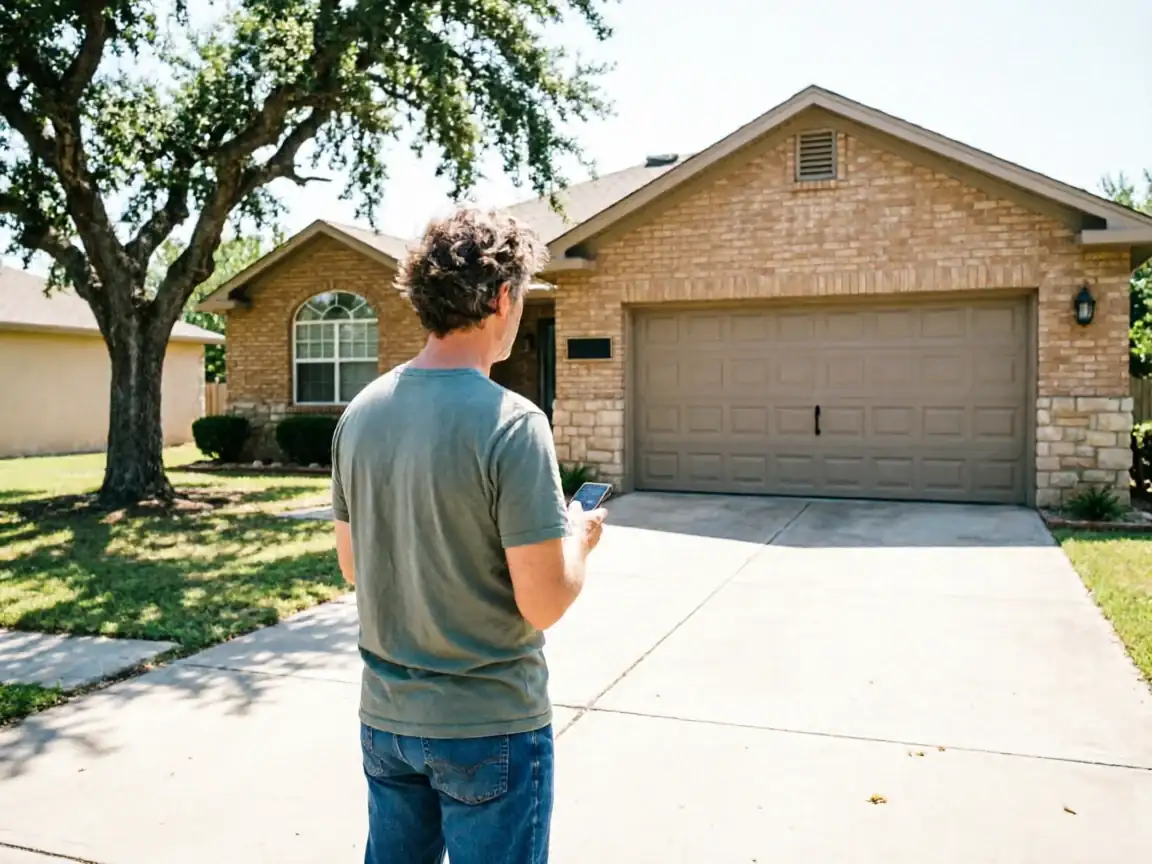
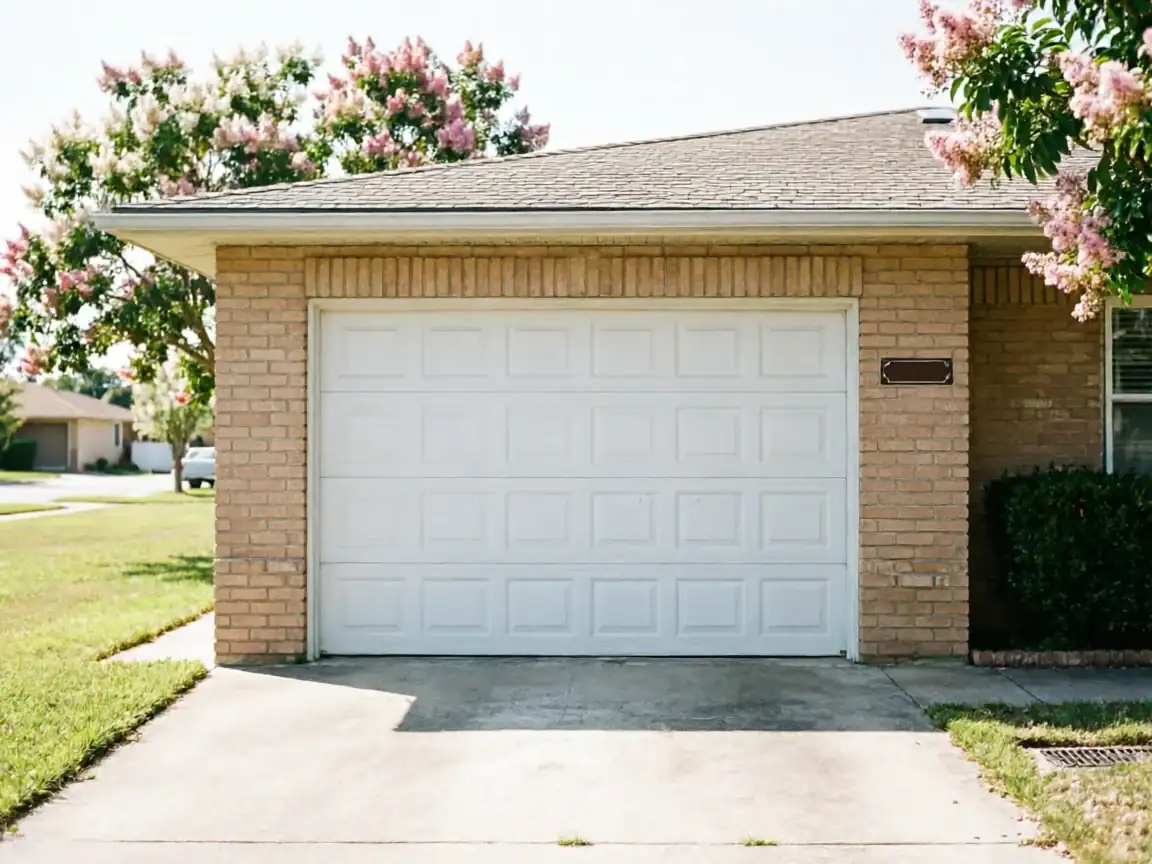
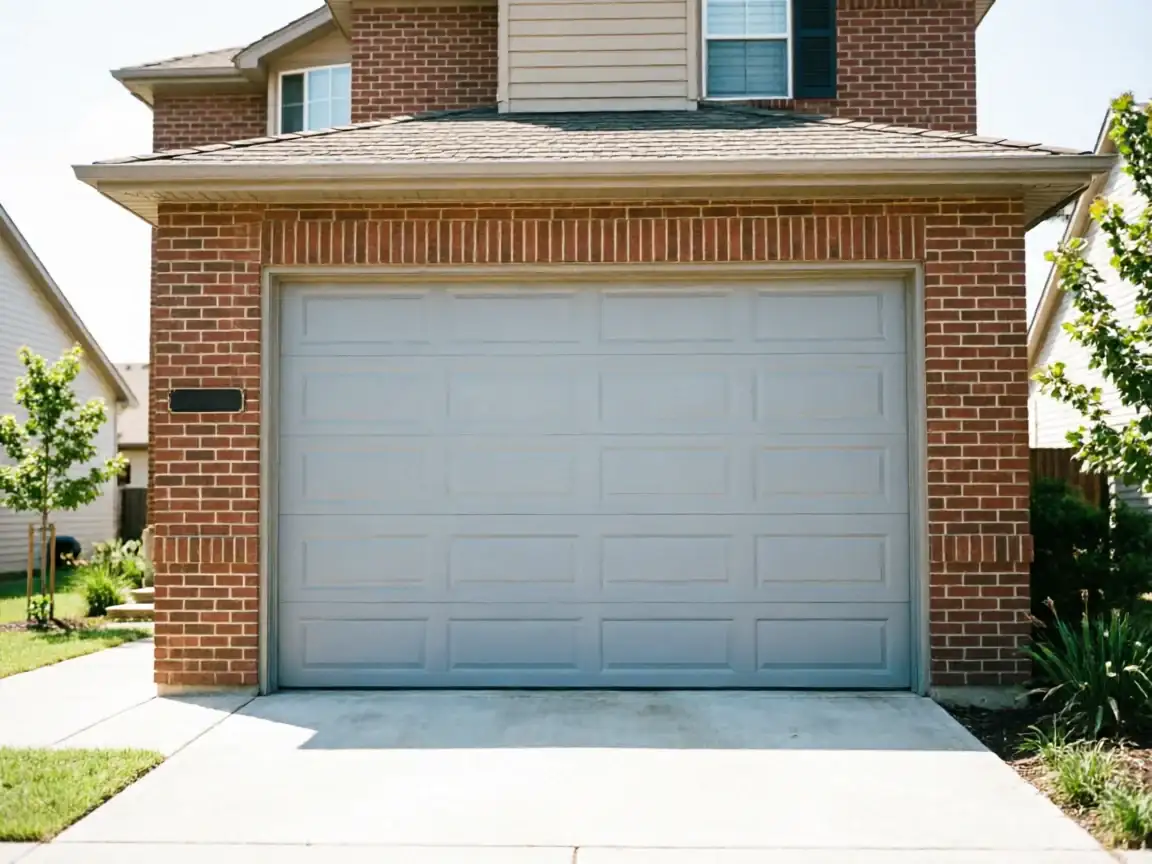
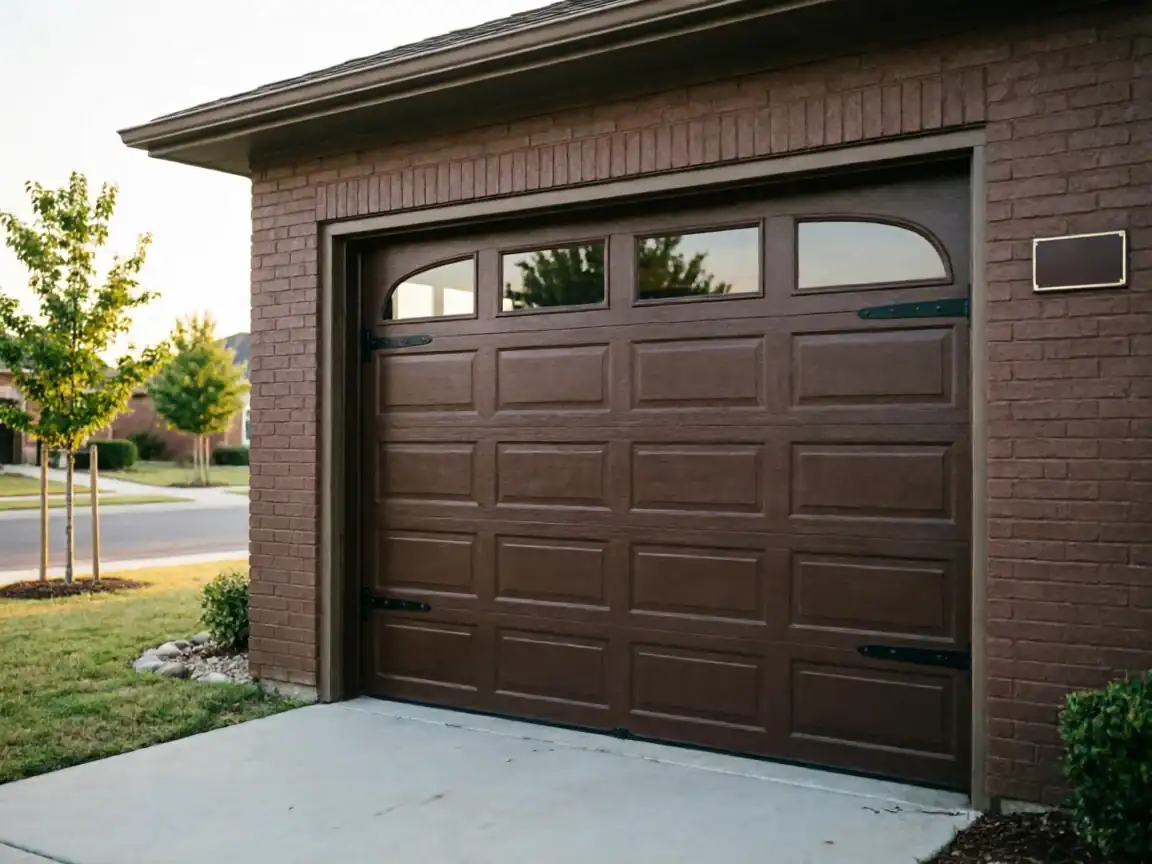
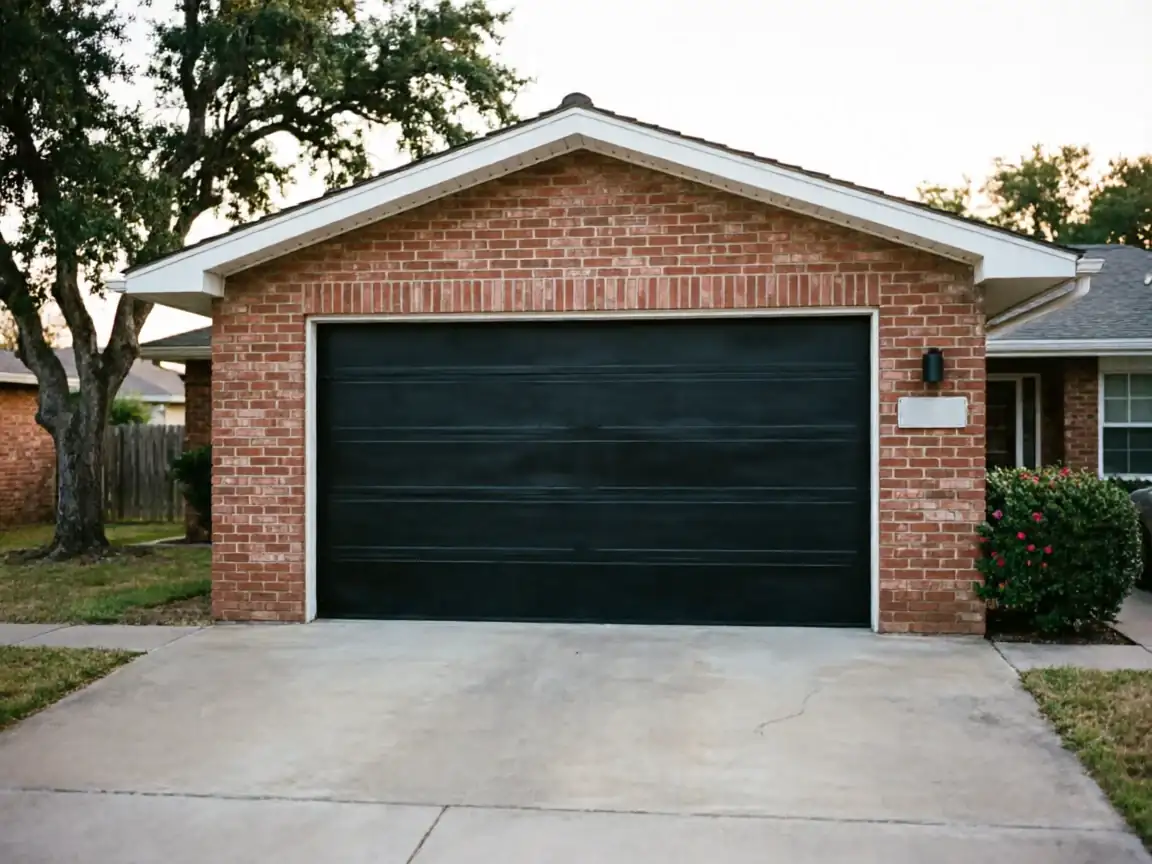
Highland Village sits right on the newer end of what we see across the service area. The whole territory we run from Watauga spans houses built anywhere from 1953 to 2014, with a median of 1993 - and Highland Village lands almost exactly on that number. That matters for panel work because it tells us what's behind the door before we ever open the truck: steel sectional doors on torsion hardware, not the older one-piece slab doors you'd find in the oldest pockets of the service area.
Cost on a panel job comes down to three things: how many panels are damaged, whether the run is still made, and whether you're matching an existing door or replacing the whole thing. A single bottom panel on a standard 16x7 double door is the cheapest fix. A top panel with a window cutout, or a full-width panel on a wider door, costs more because of the extra steel and trim work. If your door's run was discontinued - which happens on doors from the early-to-mid 90s - the cheaper path is sometimes a full door swap instead of chasing a panel that no longer exists.
Household income here runs $164,459, well above the $99,494 median for the rest of the service area, which tends to mean more insulated and higher-gauge steel doors going in originally. Those cost more to replace per panel than a bare single-layer door, but they also hold up better to dents.
The Symptom
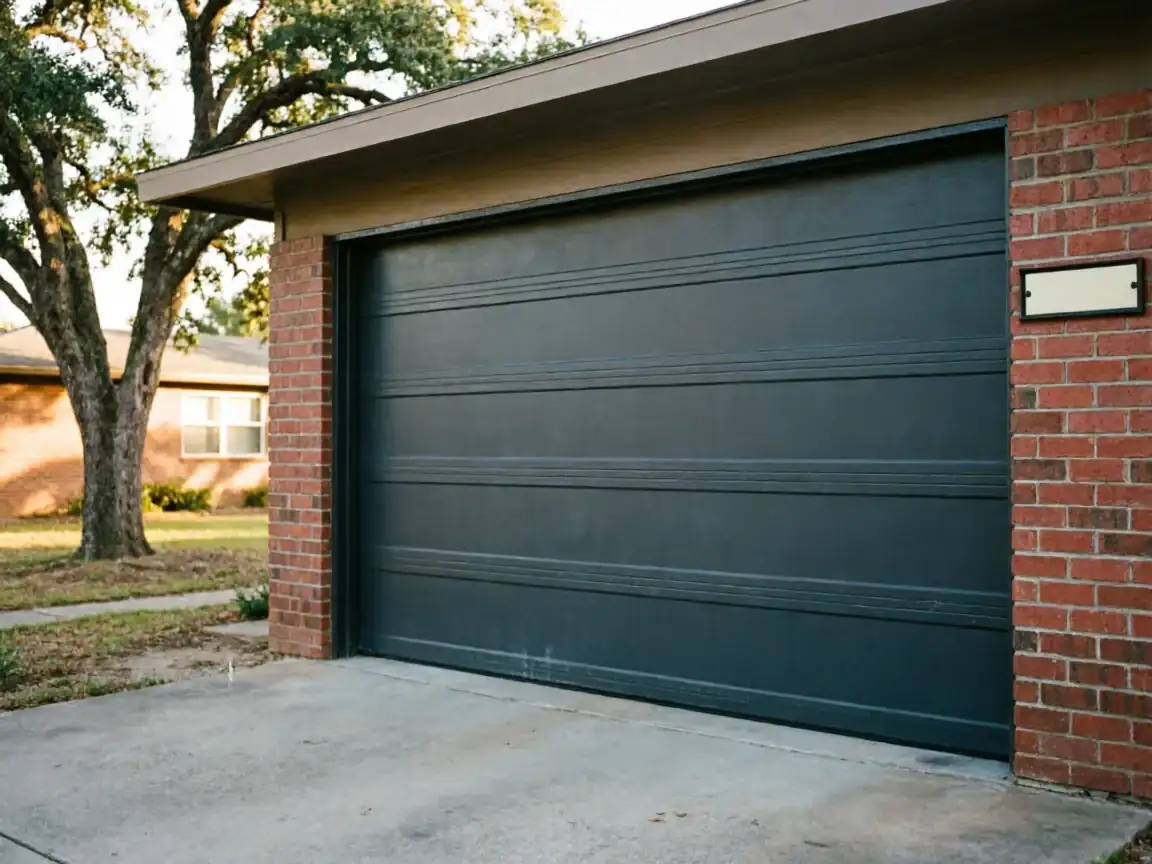
The giveaway on a 1990s steel door is usually a dent, not a crack. Steel panels from that era dent inward on impact - a car bumper, a bike, a trash can caught by wind - rather than splitting the way an older wood panel would. You'll see the dent stay put instead of popping back, and often the seam between that panel and its neighbors will pull slightly out of true.
The other common symptom is rust bleed along the bottom panel, especially where the door meets the slab. Thirty-plus years in, the galvanized coating on the lowest panel starts to go first because that's the panel that sits closest to standing water and lawn chemicals. You'll see orange streaking at the panel seam before you see an actual hole.
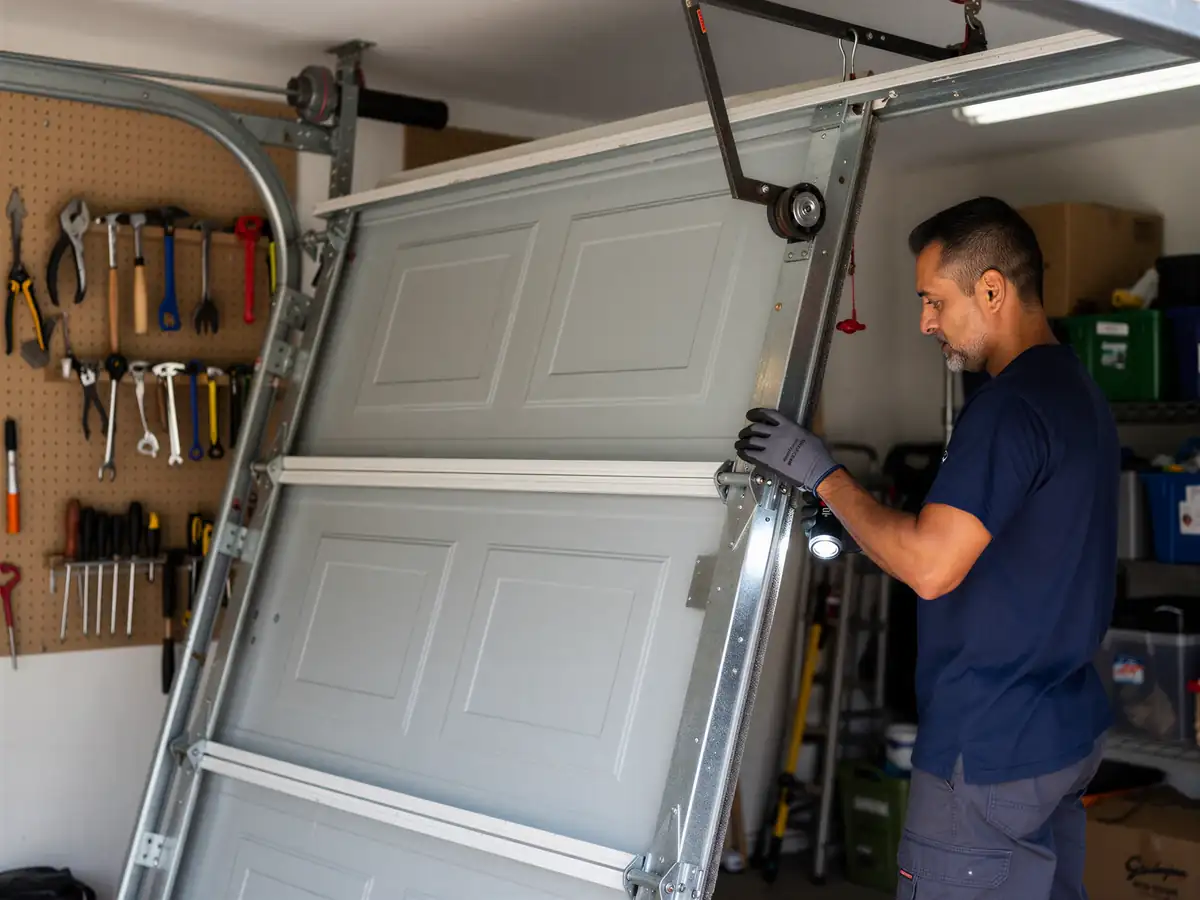
If the door still opens and closes square and the track isn't bent, the damage is probably cosmetic and contained to the one or two panels you can see. If the door binds, drags, or the opener strains on a damaged section, the panel's pulled the track out of alignment and that's a bigger job than panel swap alone.
How Long It Takes
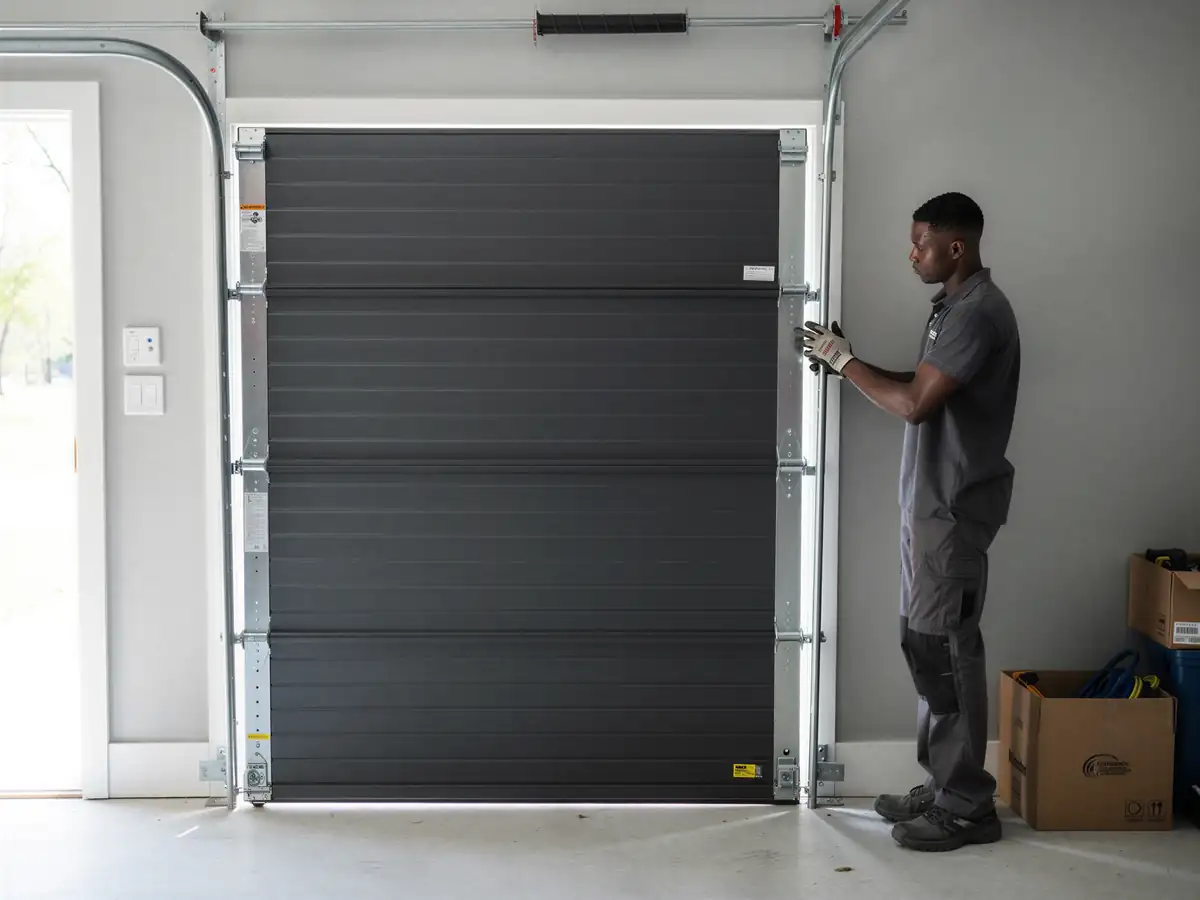
A single panel swap on a door where the run is still in stock is usually a one-visit job
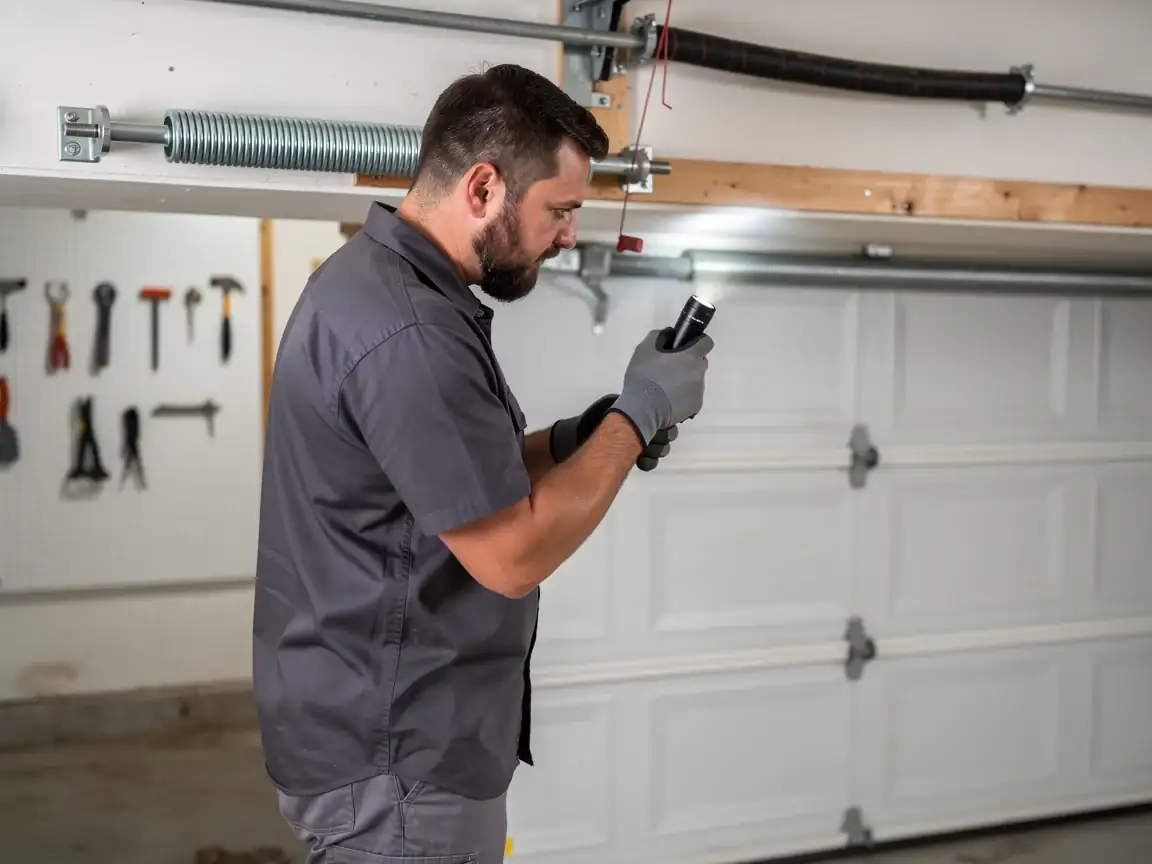
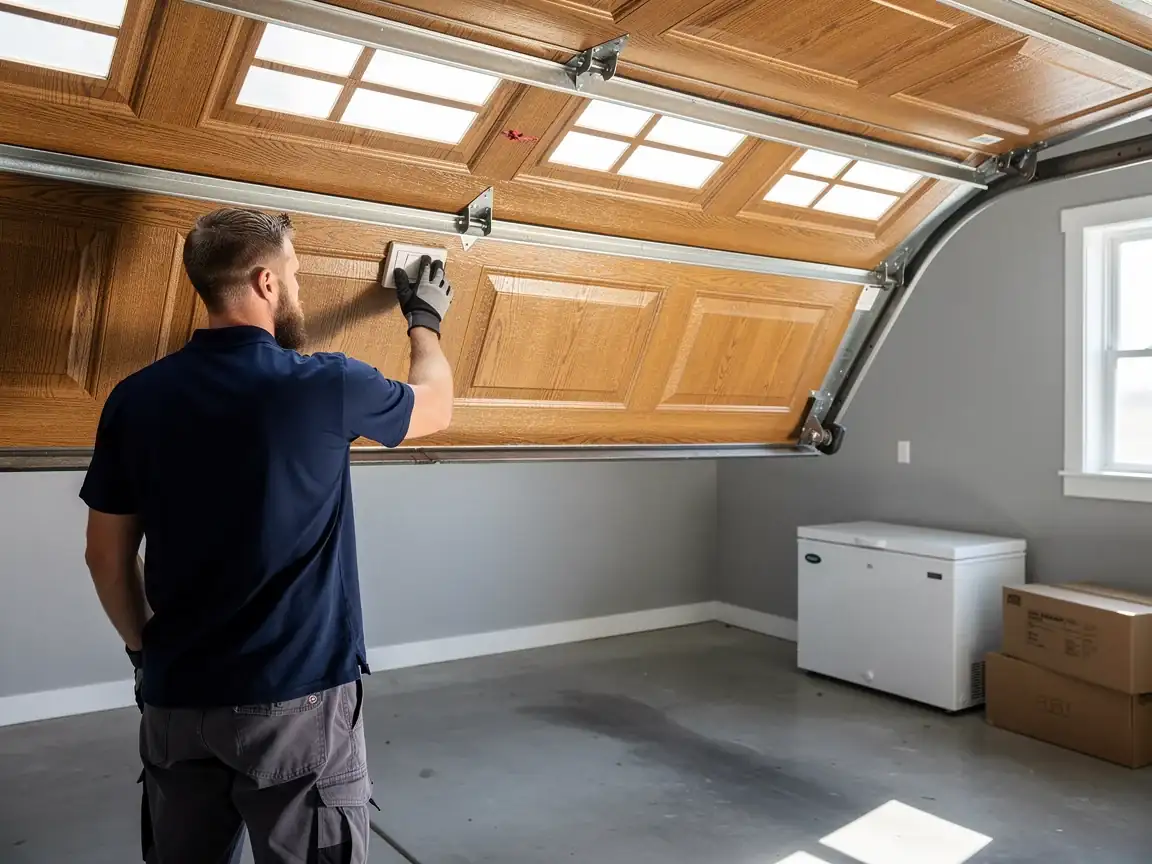
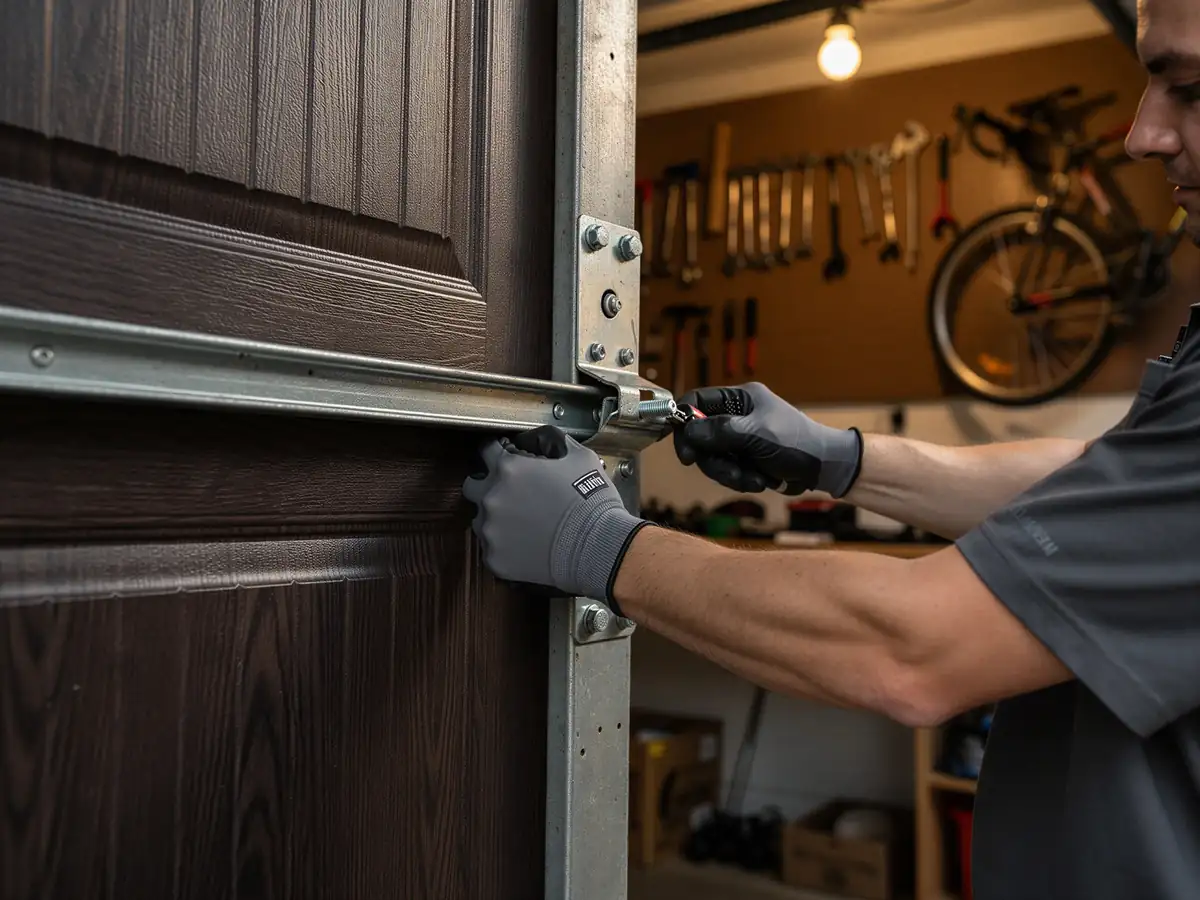
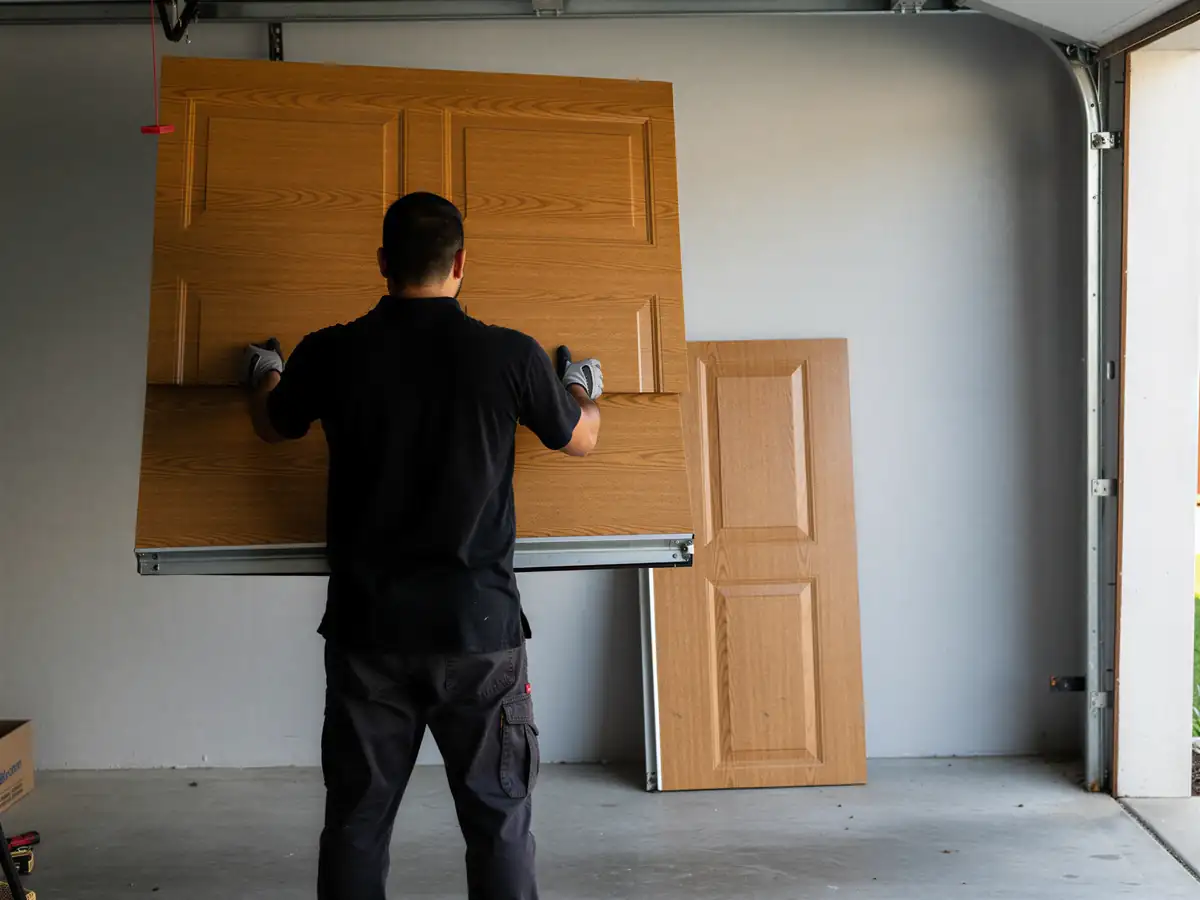
We pull the damaged panel, match the hinge spacing, and set the replacement without touching the rest of the door. The time sink isn't the install, it's sourcing: if your door was built in the early or mid-90s and the manufacturer has moved on to a new panel profile, finding an exact match can take longer than the repair itself.
Multi-panel jobs, where a dent has knocked the track out of parallel
Take longer because we're also resetting alignment on both tracks, not just swapping steel. Expect that to run longer than a single clean panel swap.
Color matching is its own timeline
A door that's faded over three decades of Texas heat won't match a brand-new panel on day one regardless of paint code - steel fades unevenly, and a fresh panel next to sun-bleached neighbors will stand out until it weathers in. We tell people that up front rather than promise a seamless match we can't deliver that day.
The Complications
The biggest complication on Highland Village doors isn't the panel, it's the run. Doors built in the early 1990s - which lines up with where this area's housing median sits - often used panel profiles that manufacturers have since changed or dropped. When that happens, we're matching by hinge spacing and panel height rather than by exact part number, and sometimes there's no clean match at all.
When that's the case, we say so instead of forcing a mismatched panel onto a door that'll look patched forever. A full door replacement sometimes costs less in the long run than hunting down a discontinued panel and still ending up with a visible seam.
Insulated doors add another wrinkle. If the original door has a foam core bonded between steel skins, a single-skin replacement panel won't match the thickness or the R-value, and mixing panel types on one door is rarely worth doing. We'll tell you straight if your door's insulated construction means the whole door needs to go rather than one section of it. That's not us upselling - it's just how insulated steel doors are built.