Booking a Visit
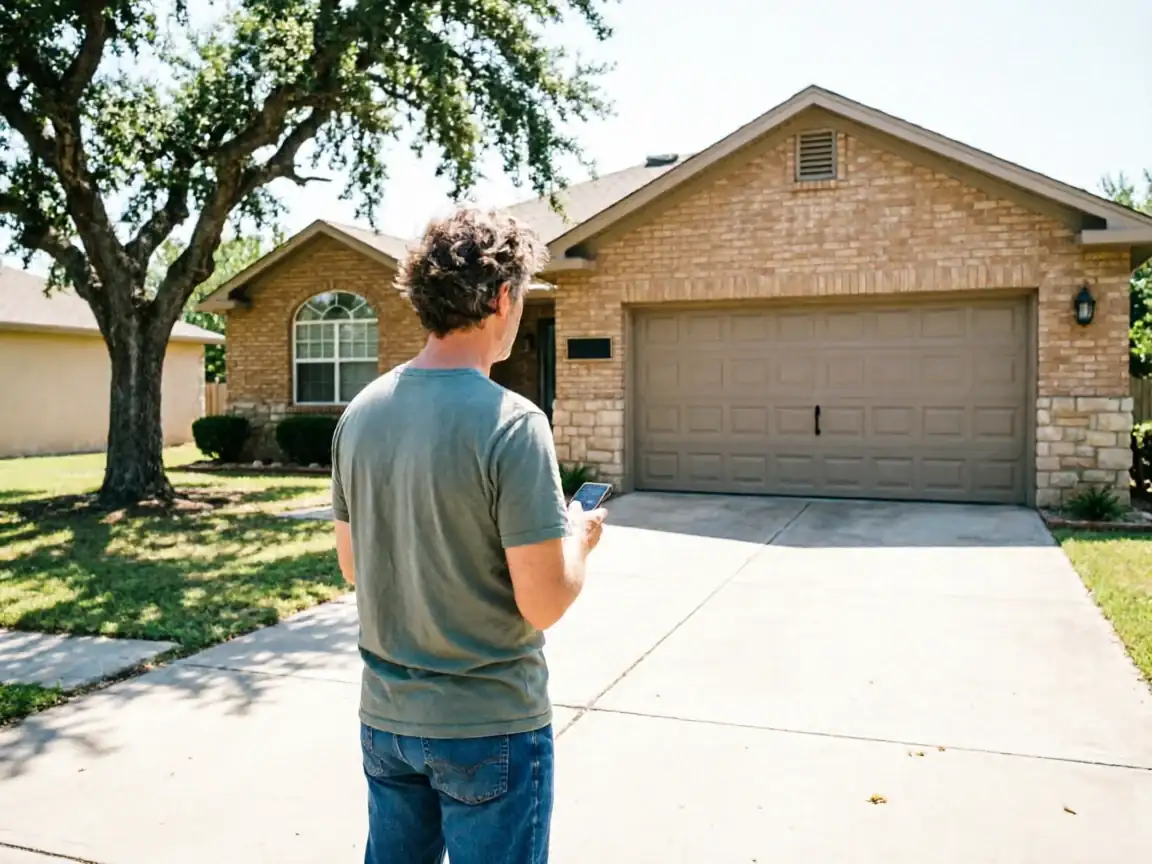
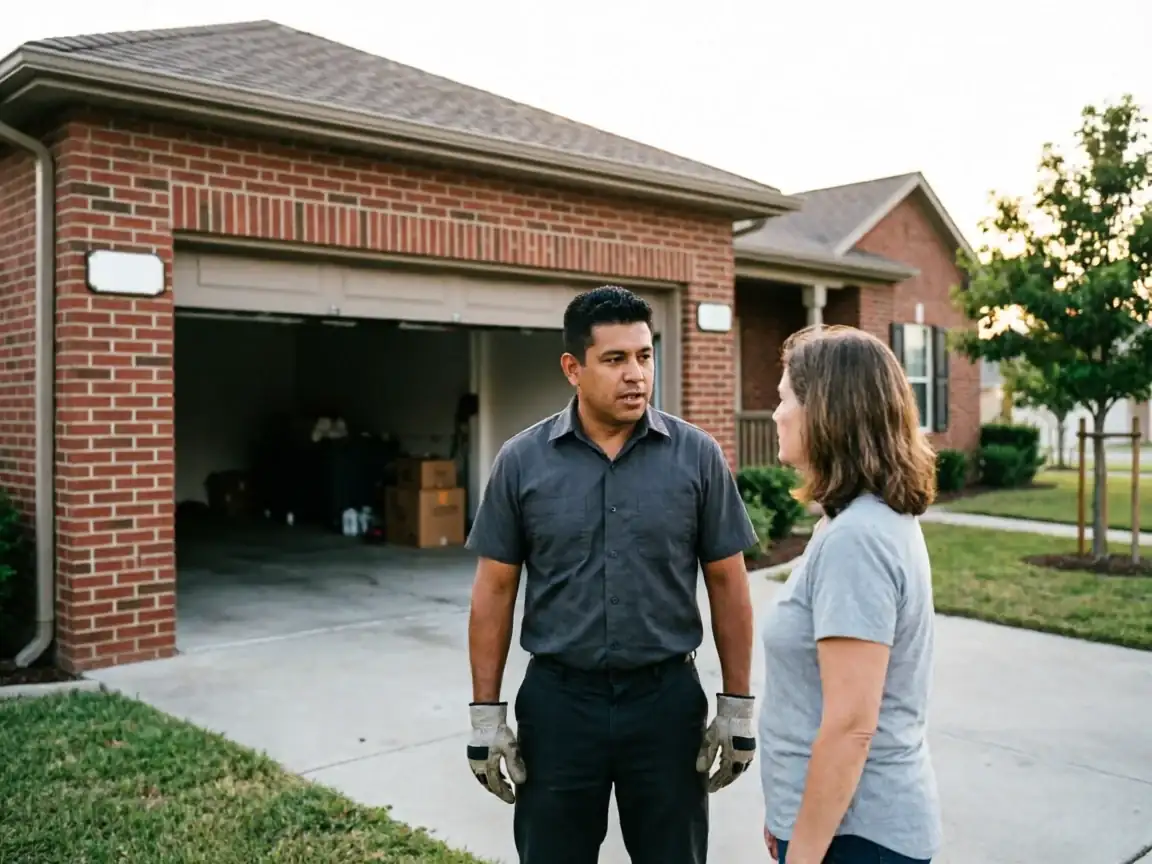
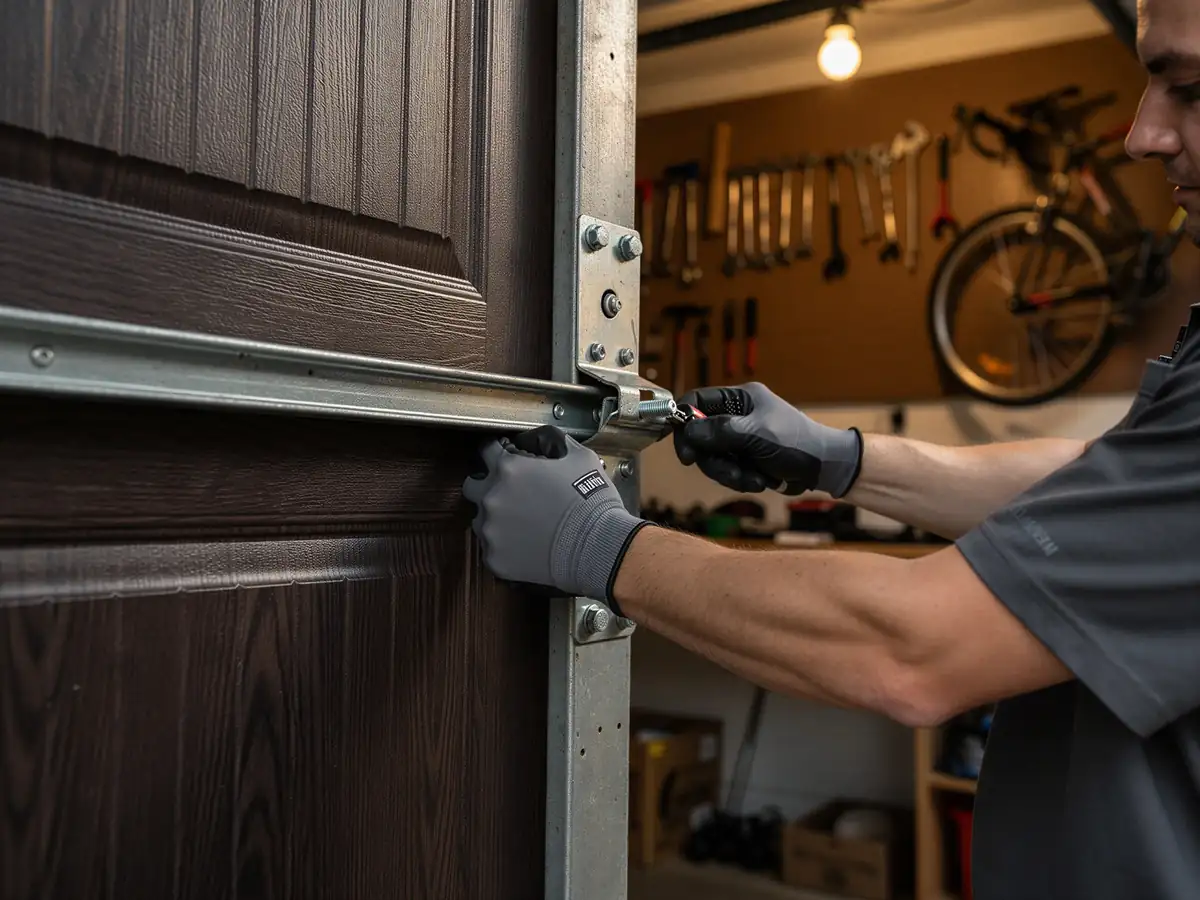
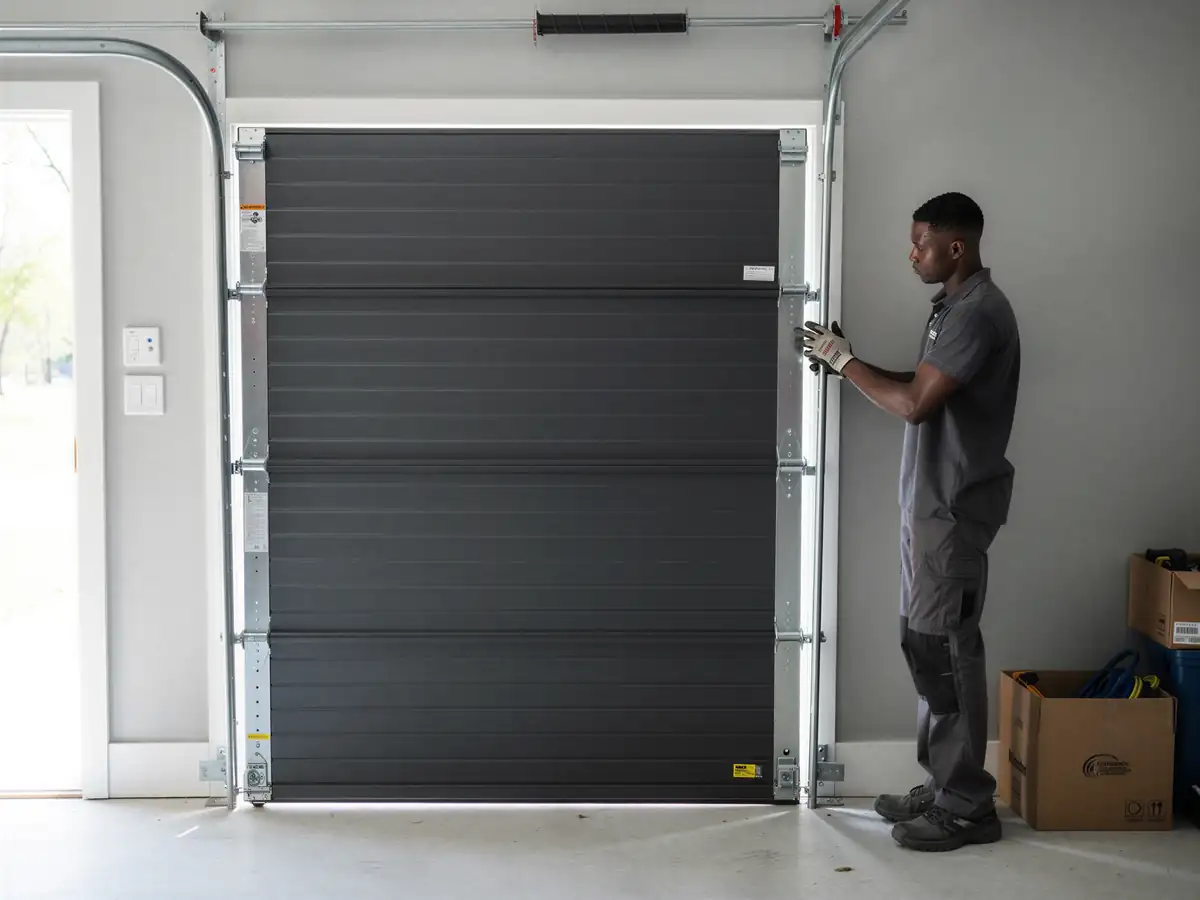
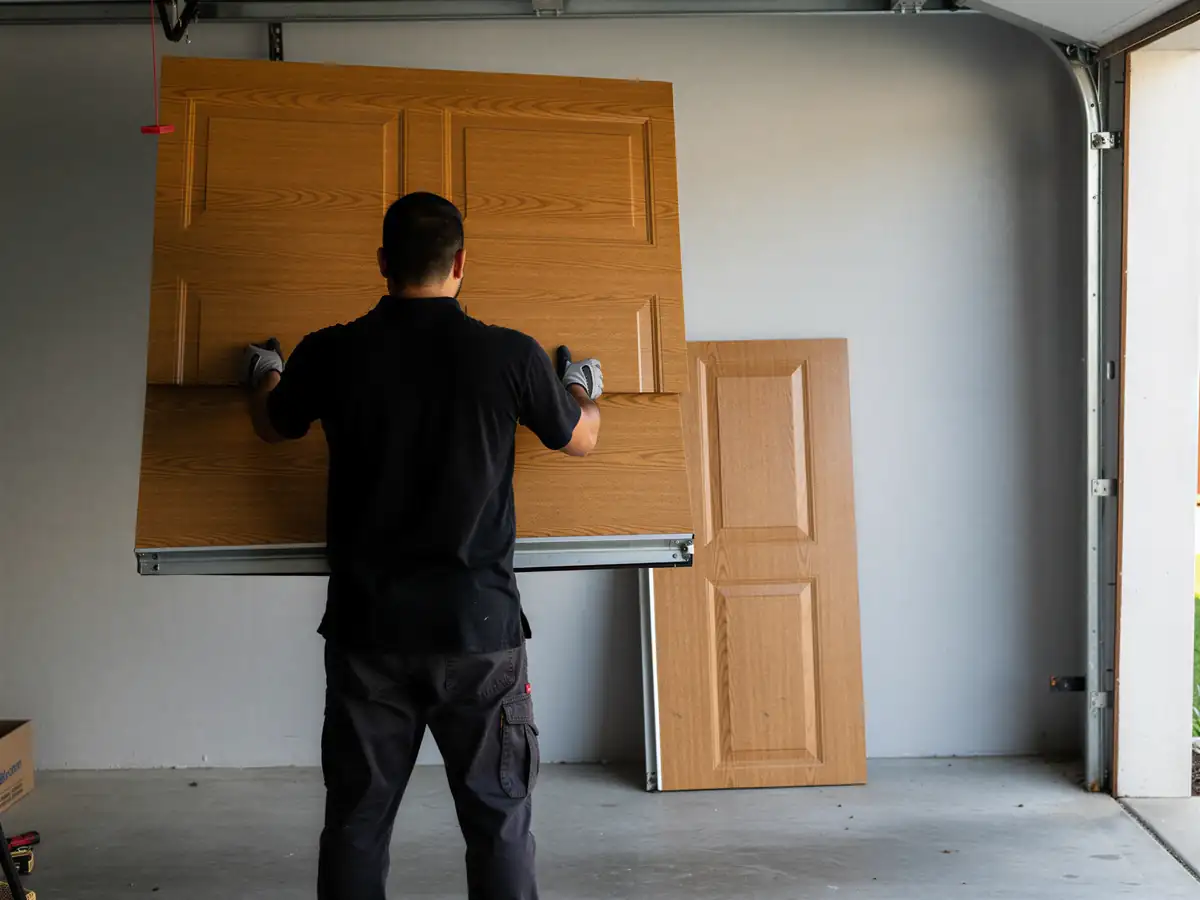
Call or send us your door's measurements and we'll tell you straight whether a panel match is realistic or whether you're better off replacing the whole door. We work across the wider service area out to places like Richland Hills, Saginaw, Haslet, and Roanoke, and the panel question comes up on almost every job because so much of the local housing stock shares the same era of garage door. Bring a photo of the damage and, if you can find it, any sticker or stamp on the back of the door with a model number - it saves a trip and sometimes saves you the cost of a second visit. If the panel is part of a two-car door and the damage is on a corner section, we'll also check the tracks and rollers on that side while we're there, since a hard impact that dents a panel often tweaks the track behind it too. We don't quote panel work sight unseen over the phone beyond a rough range, because the real number depends on whether we can source a matching panel or have to special-order one.</br>You can reach us through the contact page.
The Symptom
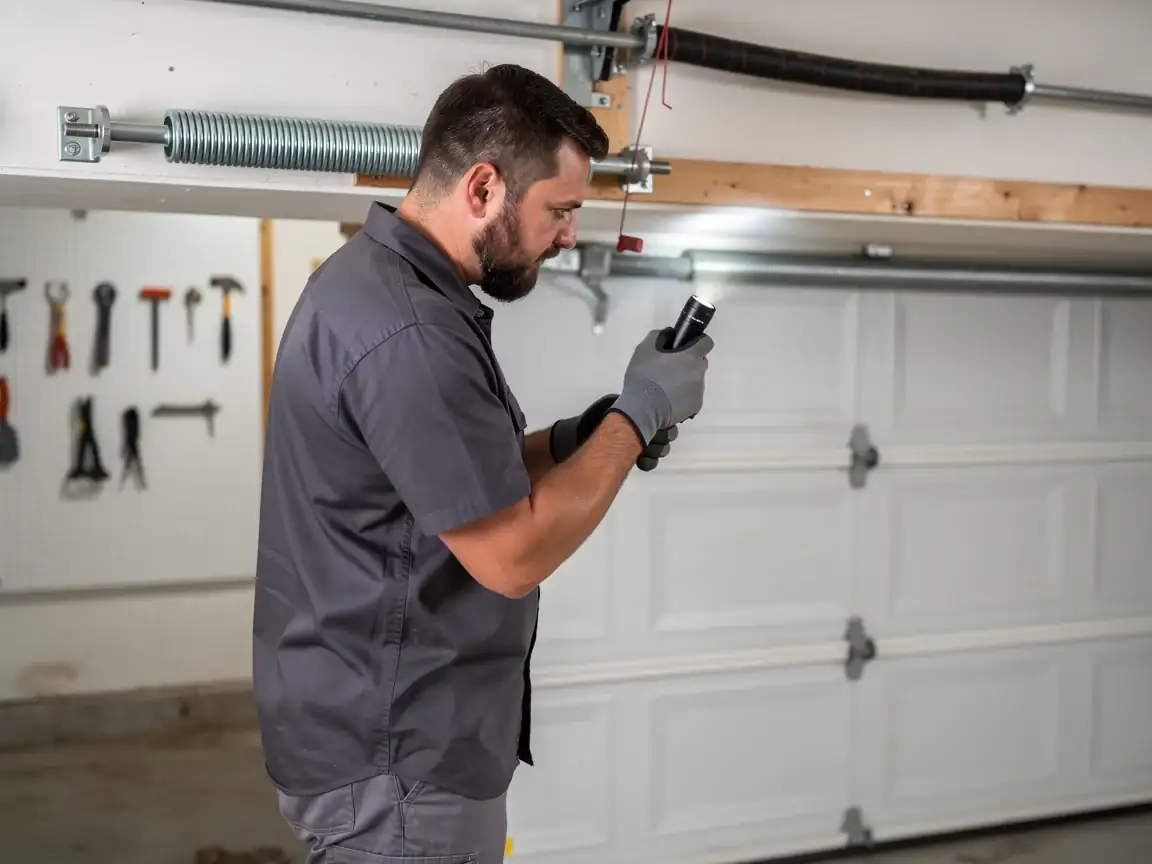
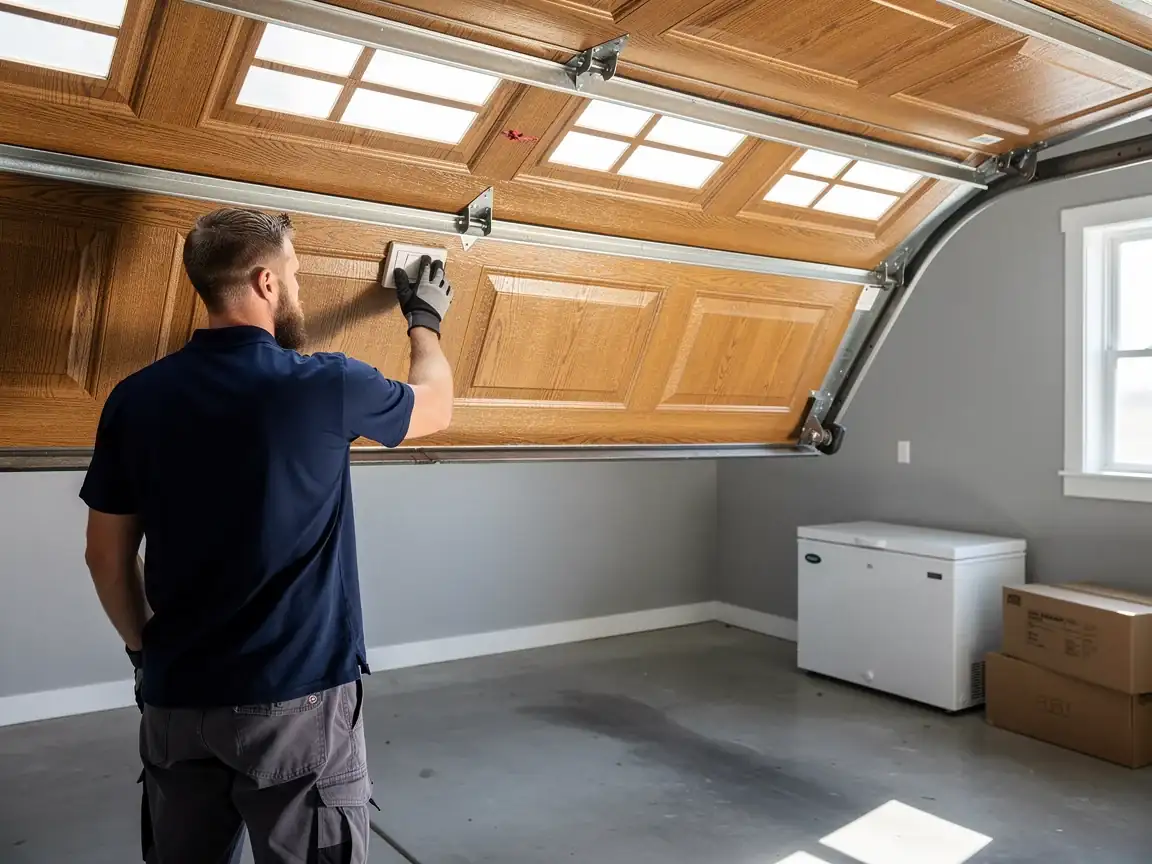
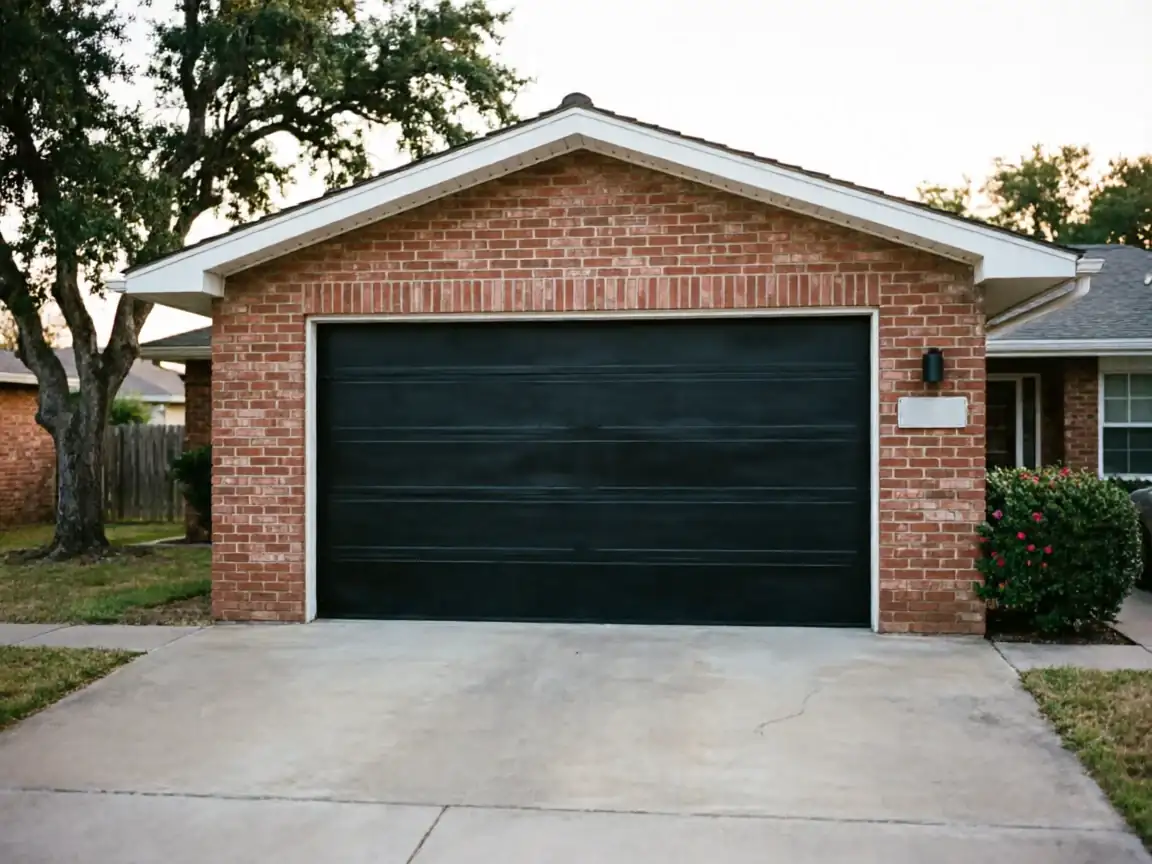
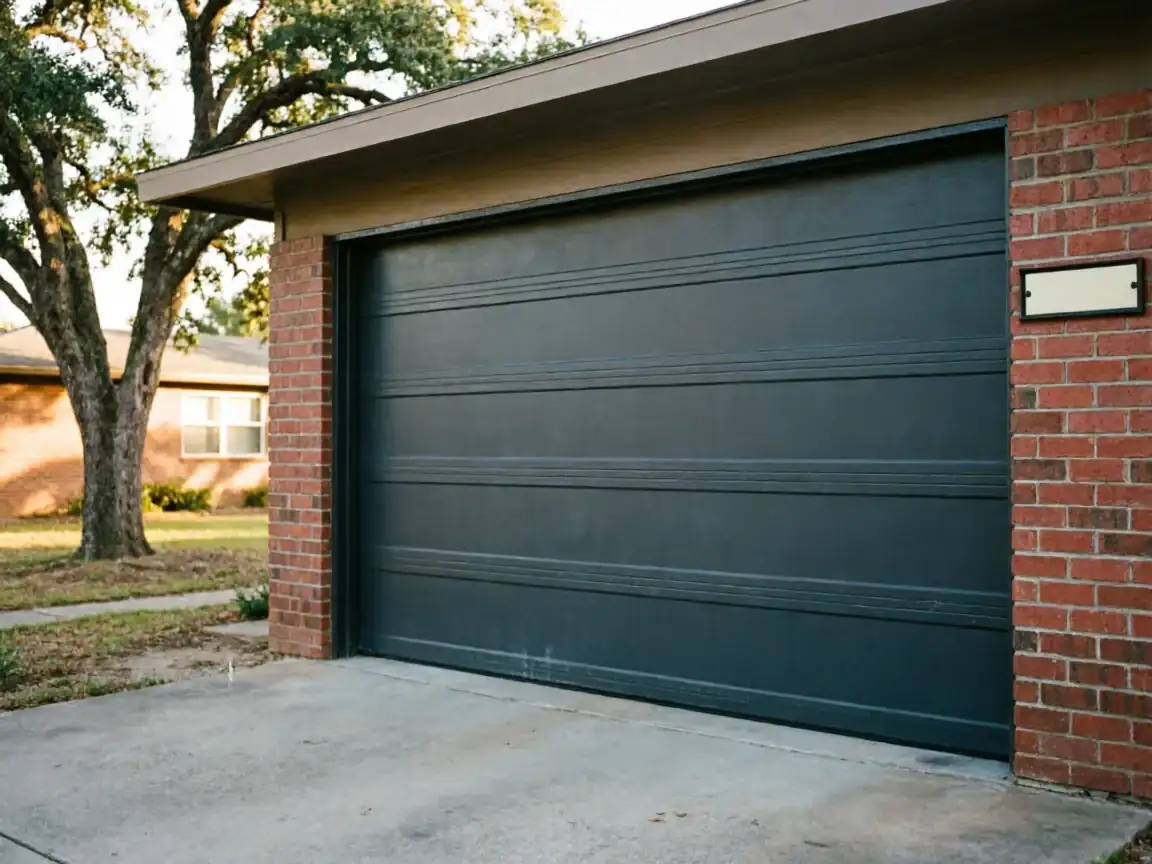
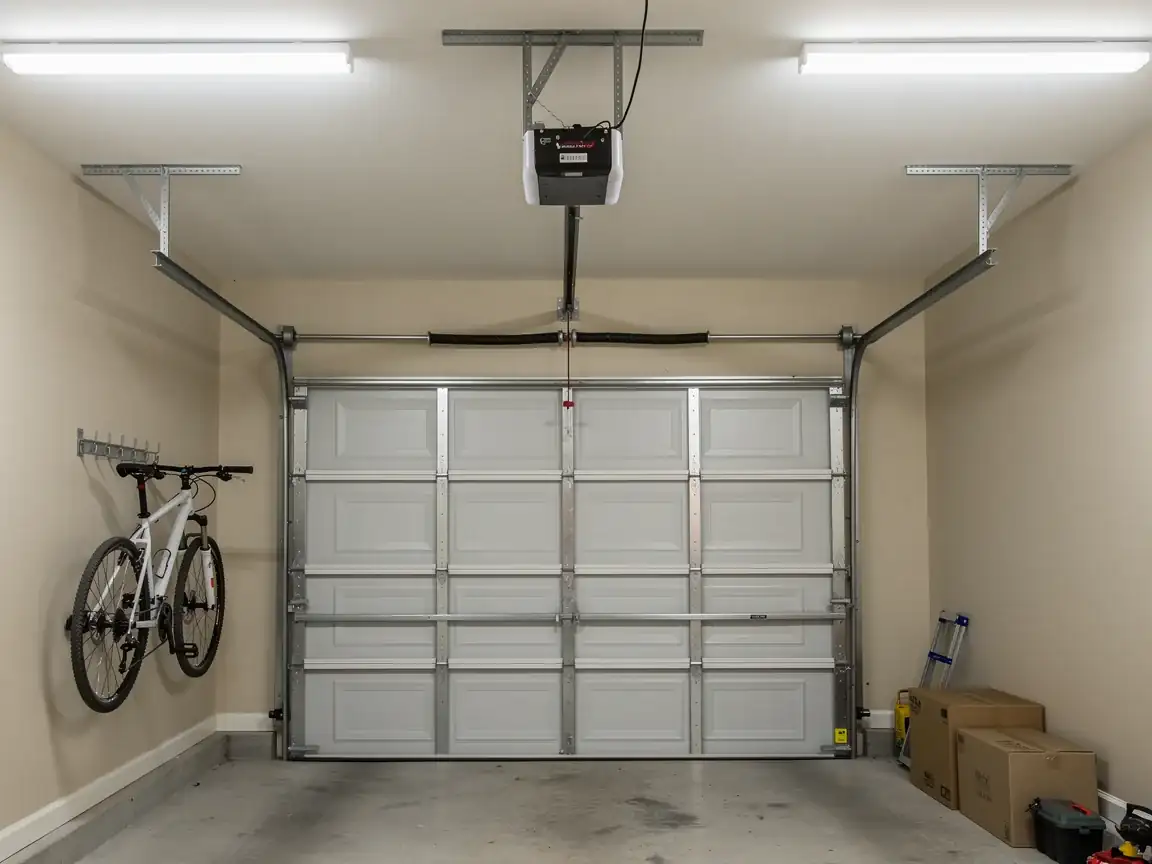
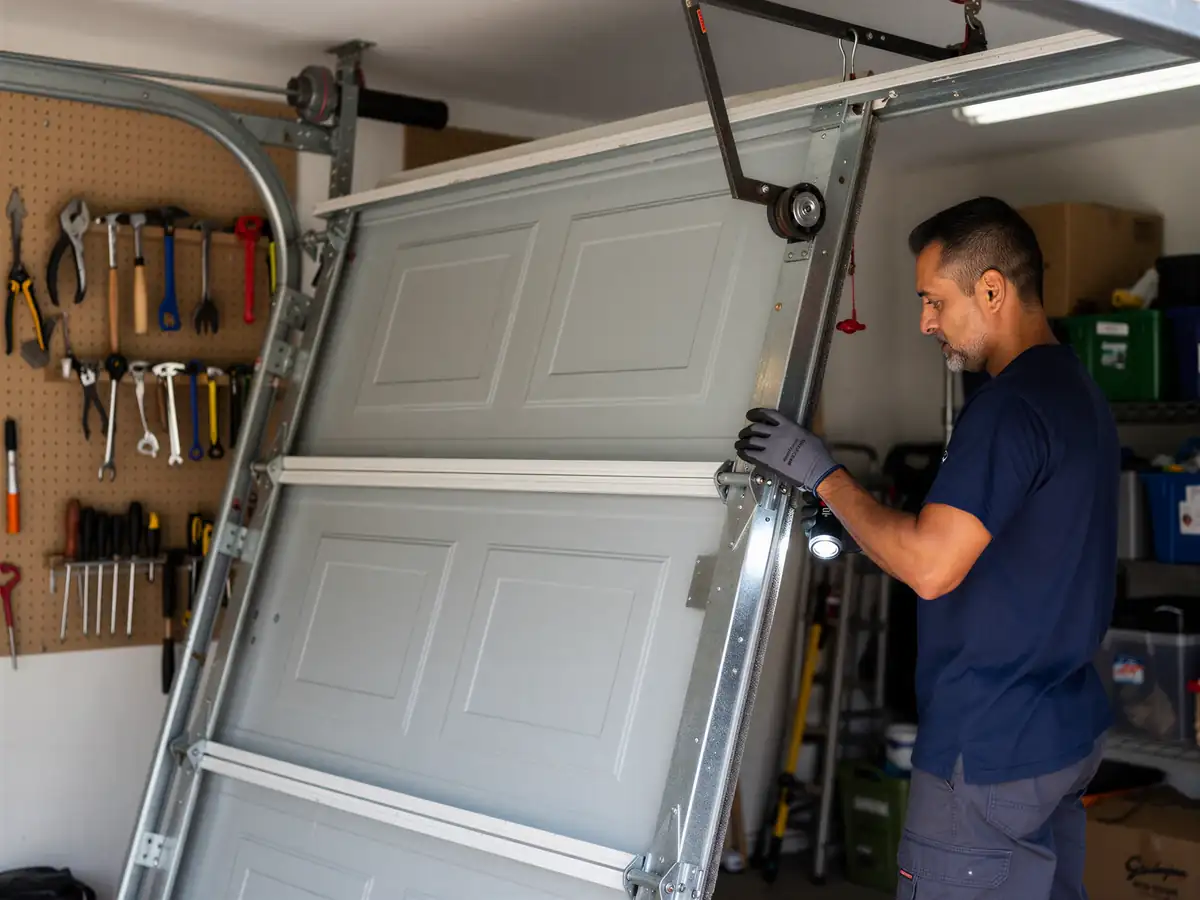
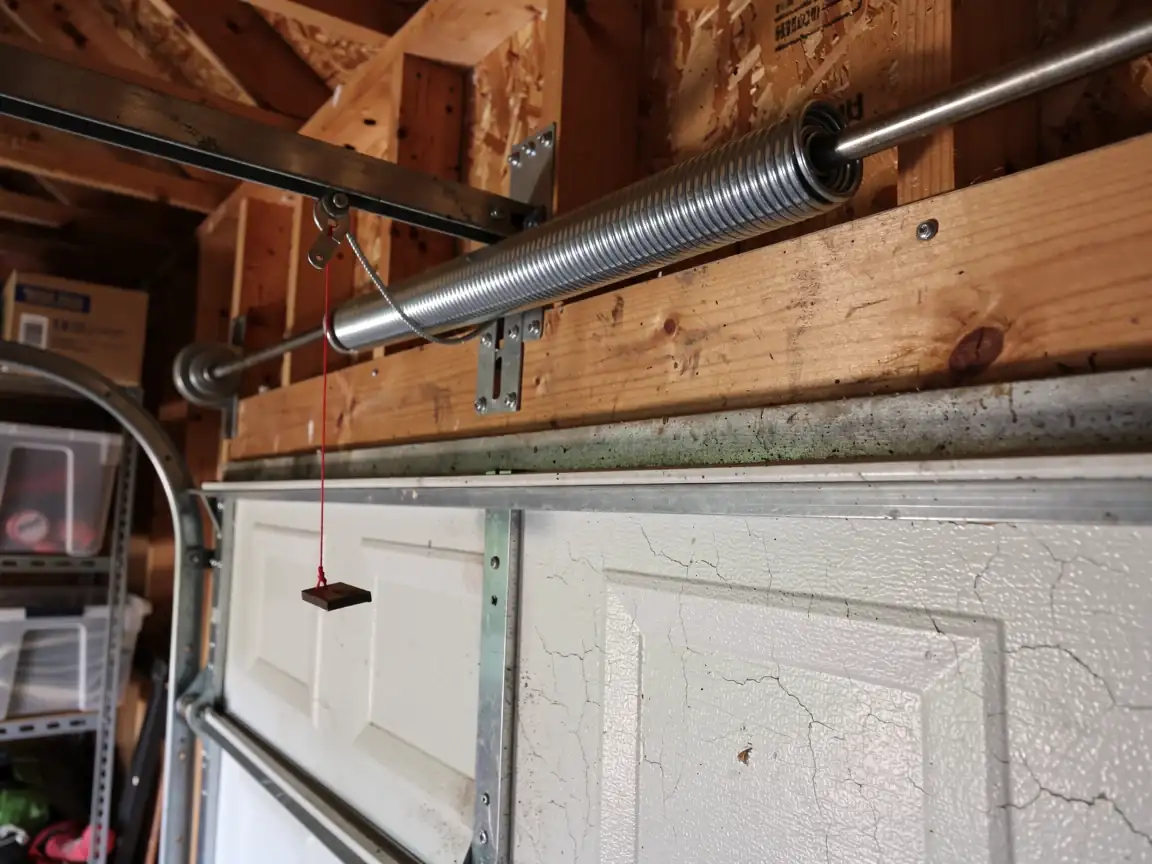
Usually it's one panel that's dented from a backed-into car, a thrown object, or a kid's bike - the rest of the door still opens and closes fine, but there's a visible crease or hole in one section. Sometimes it's not impact at all: the bottom panel on an older steel door has rusted through at the corners where water sits after it rains, or a panel has started to bow outward because the foam insulation inside has broken down over the decades. On doors that face south or west, you'll often see one panel noticeably more faded or chalky than the rest, which is sun damage rather than a defect - it just ages unevenly depending on which way the door faces. In every case the opener usually still runs the door, which is the giveaway that this is a panel problem and not a spring or track problem. A door that struggles to open at all, grinds, or sags visibly is a different issue and usually points to the hardware, not the panel.
Why It Happens Here
Two things line up to make panel damage a common call in this area. First, the age of the stock - most homes went up between 1953 and 2014, with a concentration in the 1980s and 90s across the roughly 45,309 owner-occupied houses in the service area, which means a lot of doors are old enough that their foam cores have degraded and their steel has thinned at the seams, making panels more prone to denting or rusting through than a newer door would be. Second, the climate here sits in a moderate heat band, which over enough summers bakes and fades whichever panel takes the most direct sun, usually the bottom or one side of the door, faster than the rest. With a median household income of $99,494 across the area, most owners end up weighing a panel fix against a full door swap rather than just living with the damage, which is part of why getting an honest answer on panel availability matters before any work starts.