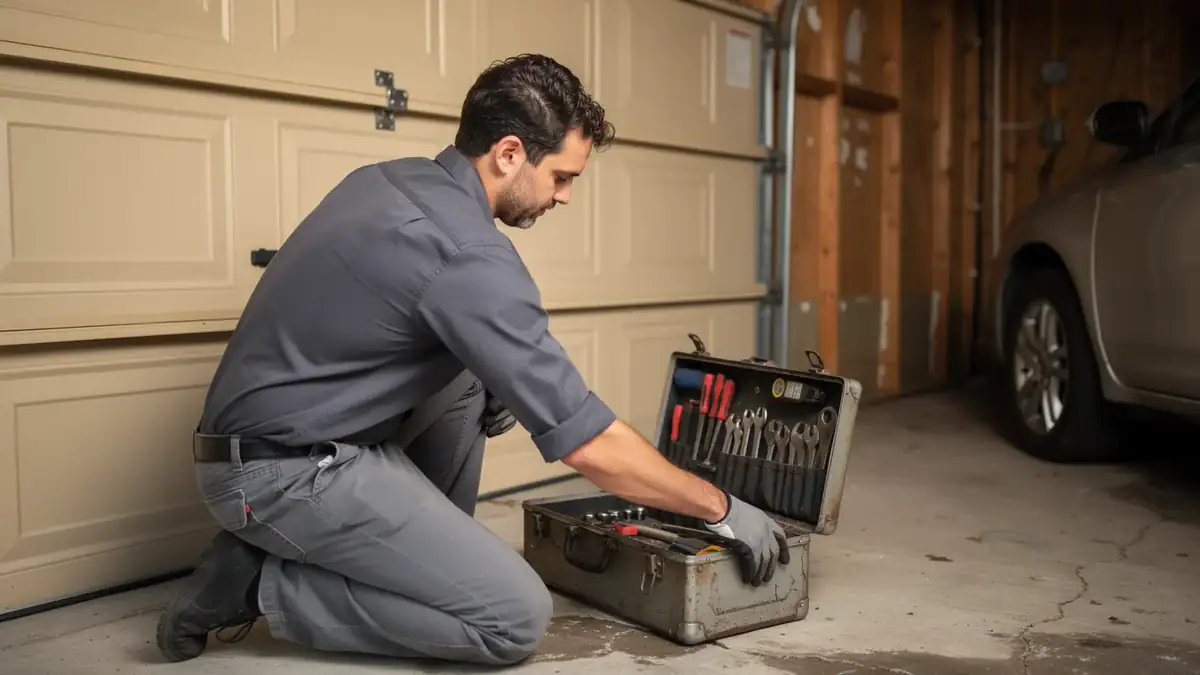
What Most People Get Wrong
Most homeowners here think a service call means someone shows up, sprays the hinges, and leaves. That's not what it is, and in a town where houses went up anywhere from 1953 to 2014 with a lot of stock clustered in the 1980s and 90s, that assumption causes real problems. A call should mean a tech checks the spring wind and cable condition, the track alignment, the opener's force settings, and the panel seams - not just the moving parts you can see from the driveway.
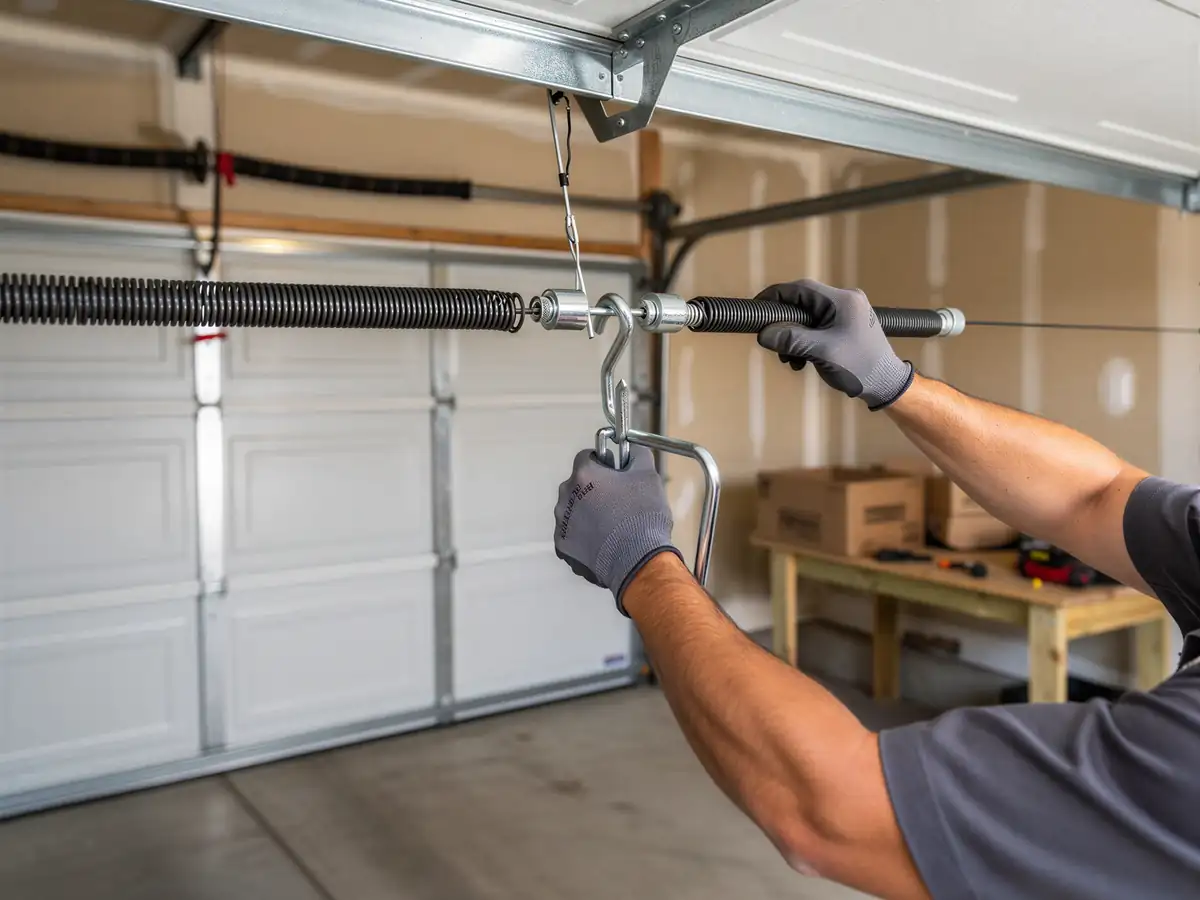
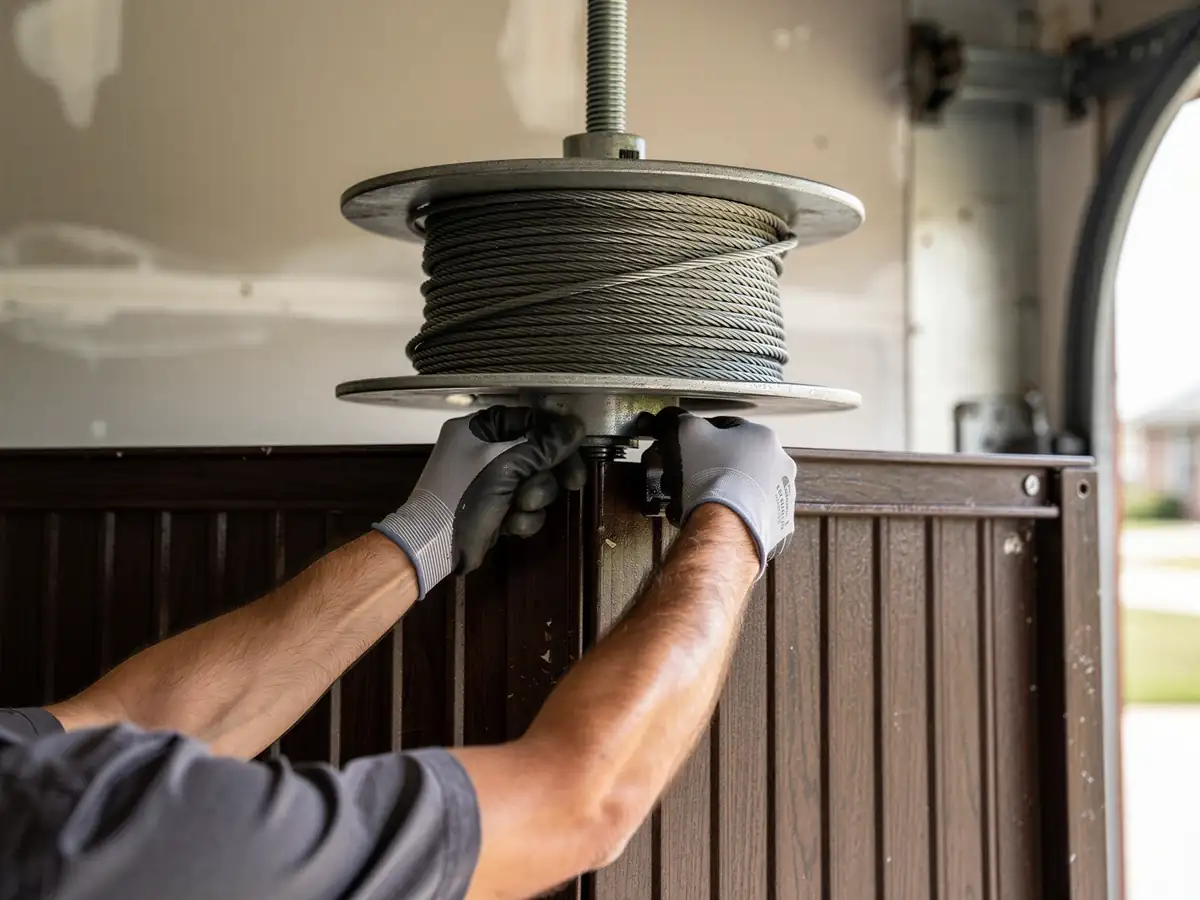
The other mistake: assuming a door built in the 90s has the same hardware as one built in 2010. It doesn't. Torsion spring sizing, drum types, and opener safety sensors all changed over those decades, and in neighborhoods like where the builds skew older, parts that worked fine for twenty years can fail without warning because nobody ever checked the wind count or cable fray. A real service call accounts for the age of the specific door in front of the tech, not a generic checklist.
We won't tell you everything needs replacing just because it's old. Plenty of original hardware from the 80s and 90s still runs fine with the right adjustment. The point of the call is finding out which is true for your door, not assuming either answer.
How Local Conditions Play In
Watauga sits in a moderate heat band, not the extreme swings some parts of the state deal with, but summers here still push steel and nylon components through real expansion and contraction cycles year after year. On a door installed in the 90s, that's two or three decades of thermal stress on the same springs and rollers, and it shows up as fatigue cracking in cables or hairline wear on plastic idler bearings before it shows up anywhere visible.
Heat also affects lubrication. Grease that was fine when a door went in during the 1990s dries out and gums up faster under repeated summer heat than it would in a cooler climate, which is part of why a tech checks lubrication state on every call rather than assuming last year's service still holds. It's a small thing, but it's the kind of small thing that turns into a seized roller on the hottest day of the year, which is never a convenient day to find out.
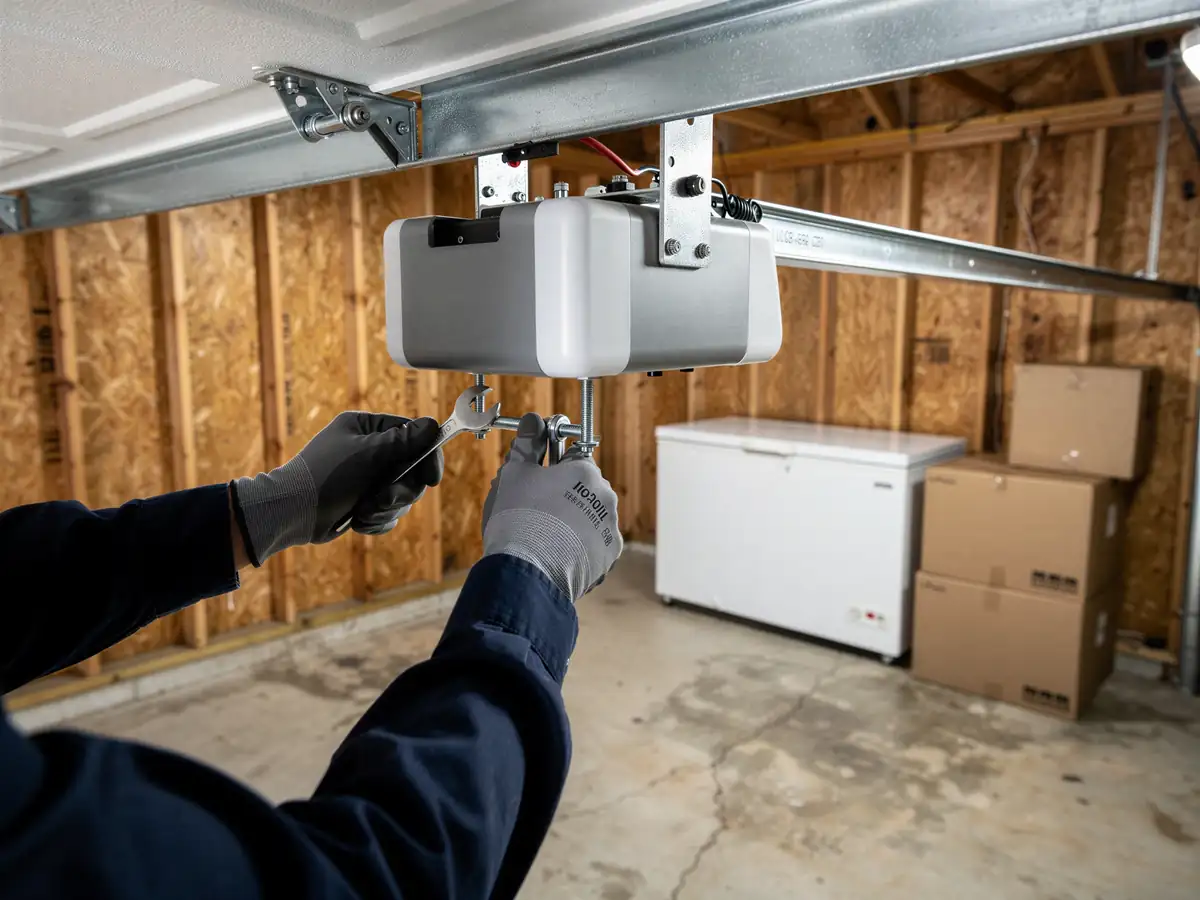
We don't deal with snow load or ice-related hardware failure here, so a service call in Watauga skips those checks entirely and spends that time on heat-driven wear instead - cable fatigue, bearing dry-out, and opener circuit board heat stress, which matters more in a house built before modern thermal shielding was standard.
What Is Going On
With roughly 45,309 owner-occupied houses across the service area and most of the housing stock dating to the 1980s and 90s
A huge share of the doors a tech sees in a week are original equipment or a first replacement from that era. That means service calls lean toward spring replacement, cable re-tensioning, and opener logic board issues rather than brand-new installation problems.
- 45,309 owner-occupied
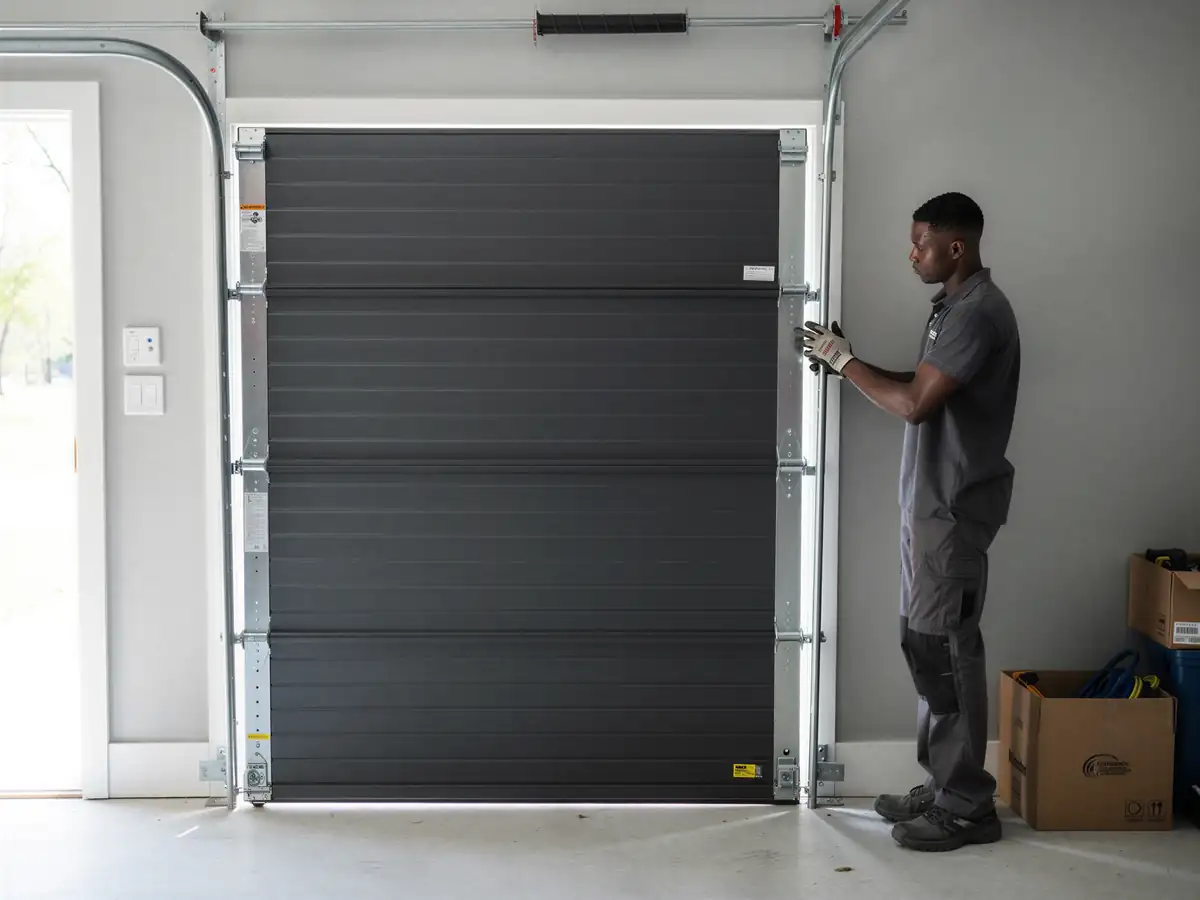
A call starts with cycling the door by hand to feel for binding
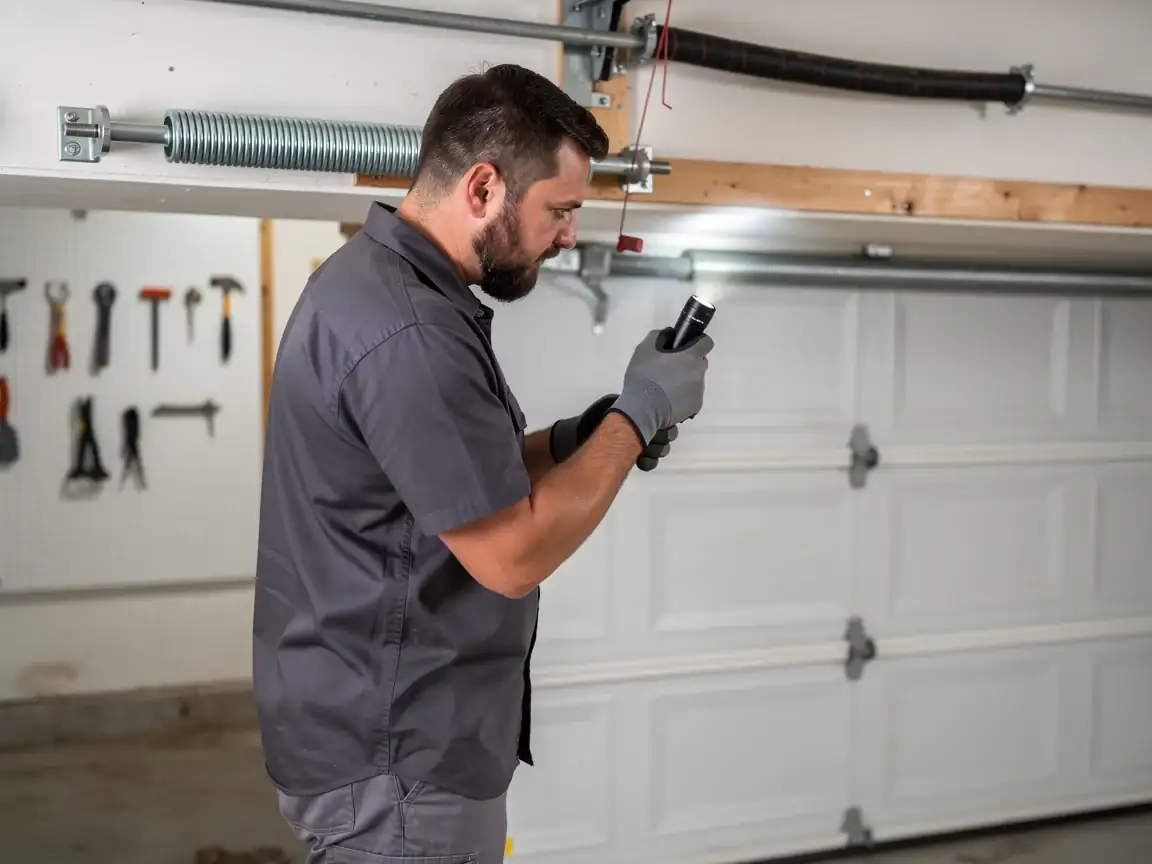
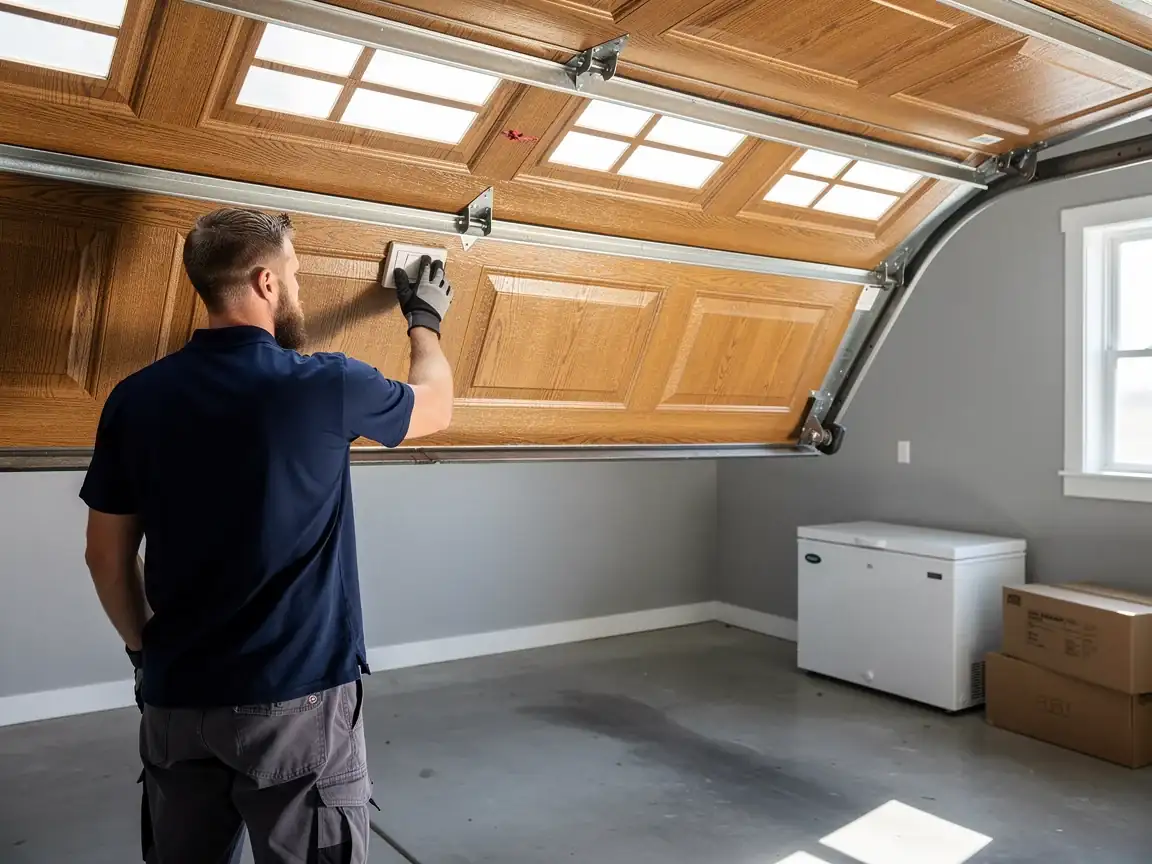
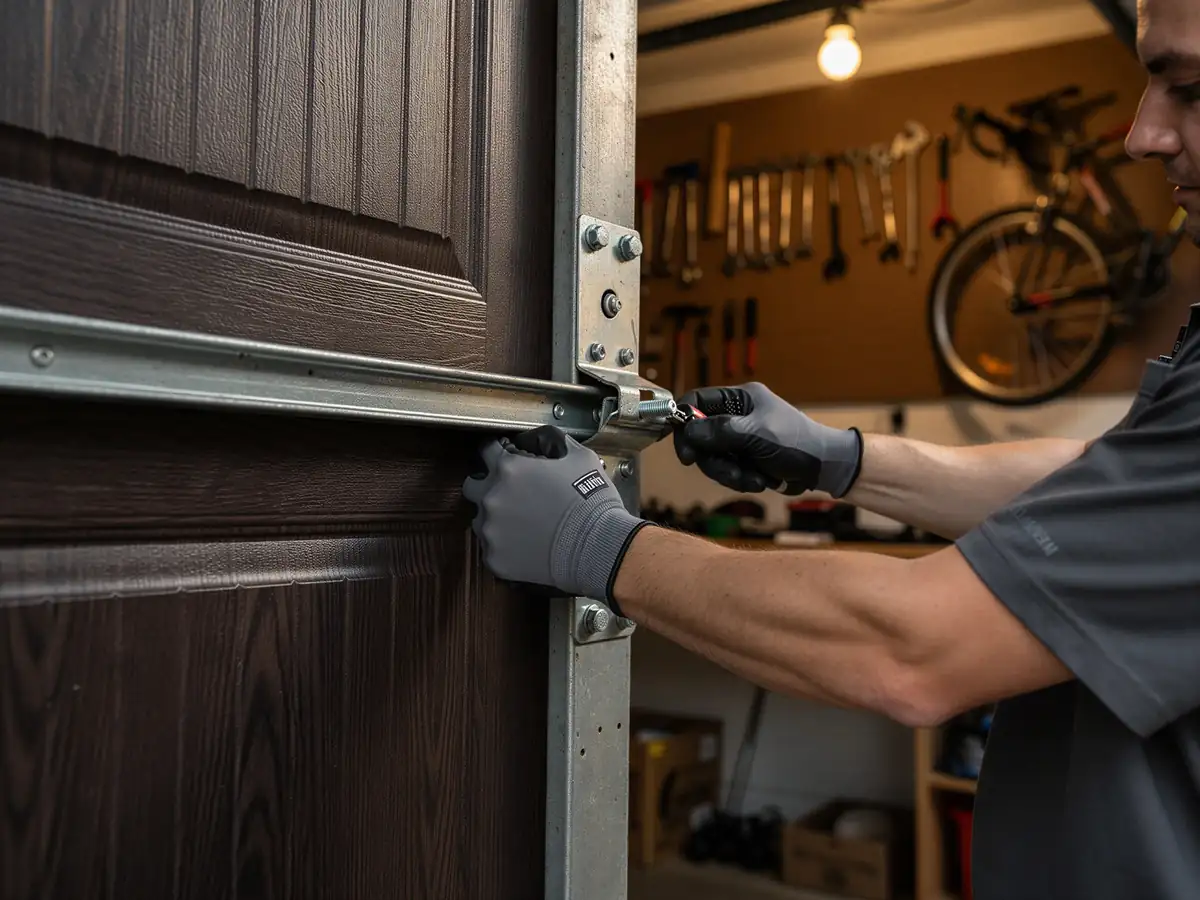
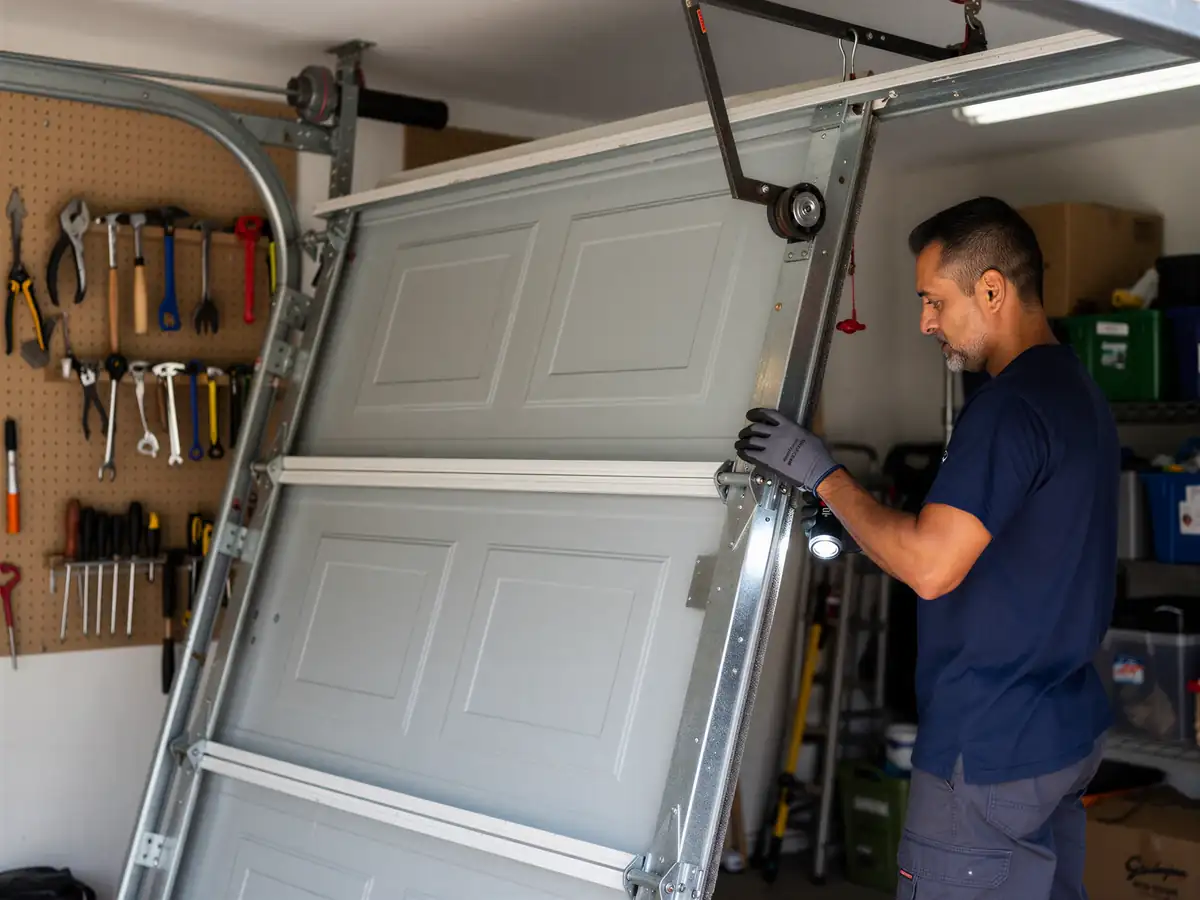
Then checking the spring's wind against the door's actual weight - a mismatch here is common on older doors that have had a panel or insulation added since original install. From there it's track alignment, roller condition, and the opener's travel and force limits, which drift over time even without a hardware failure.
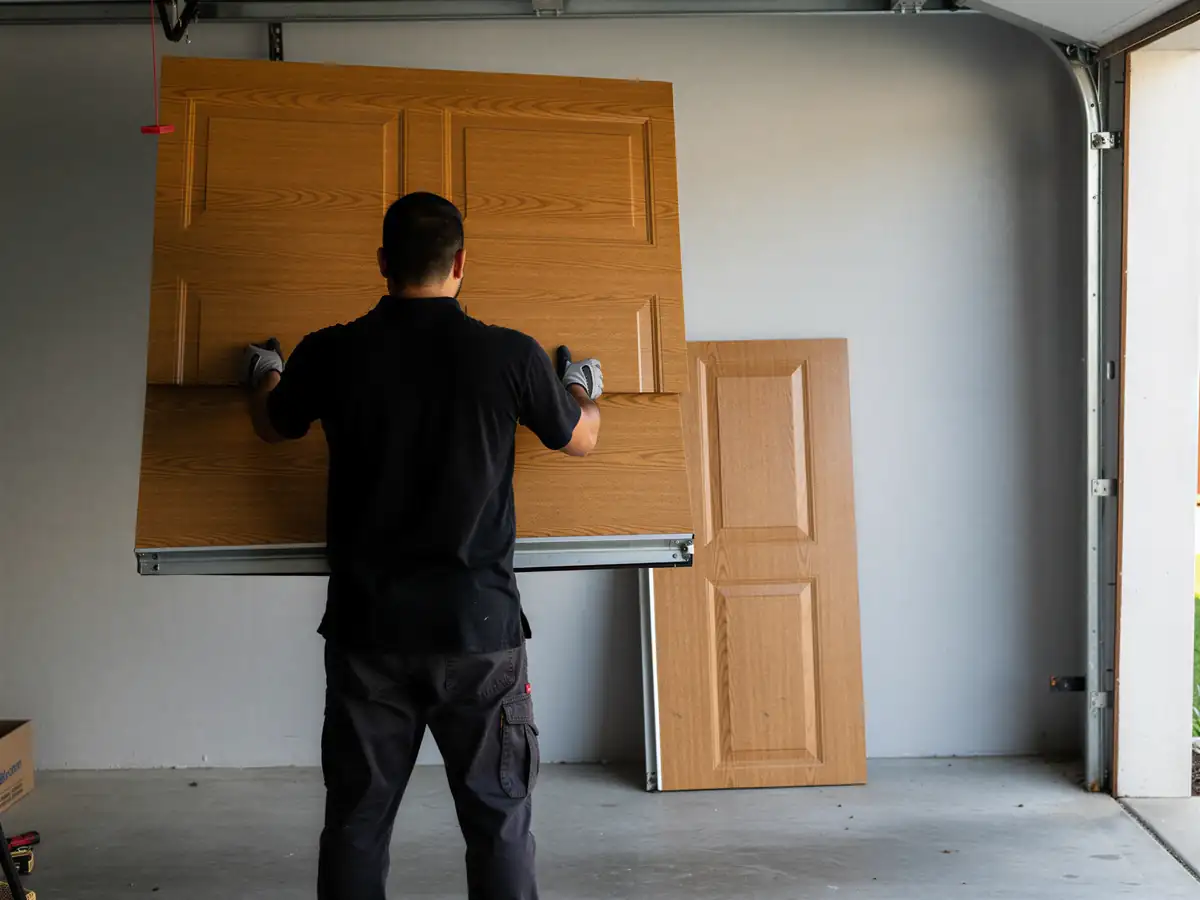
What we don't do on a standard service call: full panel replacement or structural reframing
If a door's frame has shifted or a panel is cracked beyond a patch, that's a separate estimate, not something folded into a diagnostic visit. We'll tell you straight if that's where you're headed instead of running up a bill pretending otherwise.
What It Costs
We're not going to put a number here we can't stand behind. What a service call runs depends on what's actually wrong - a spring adjustment is a different job than a cable replacement or an opener board swap, and the honest answer is that it varies by door. What we can tell you is what drives the cost: the age and type of hardware (springs and drums from the 90s are sized differently than current stock), whether parts are on the truck or need ordering, and how many separate issues show up once the door's actually open.
Households across this area have a median income around $99,494, and most jobs we see are repair and adjustment work rather than full replacement, because a lot of the original hardware from the 80s and 90s is still solid once it's properly tensioned and lubricated. Full replacement makes sense when the frame itself has moved or the door's been patched more than once already.
Call and we'll give you a real number for your door, not a range pulled from a website.