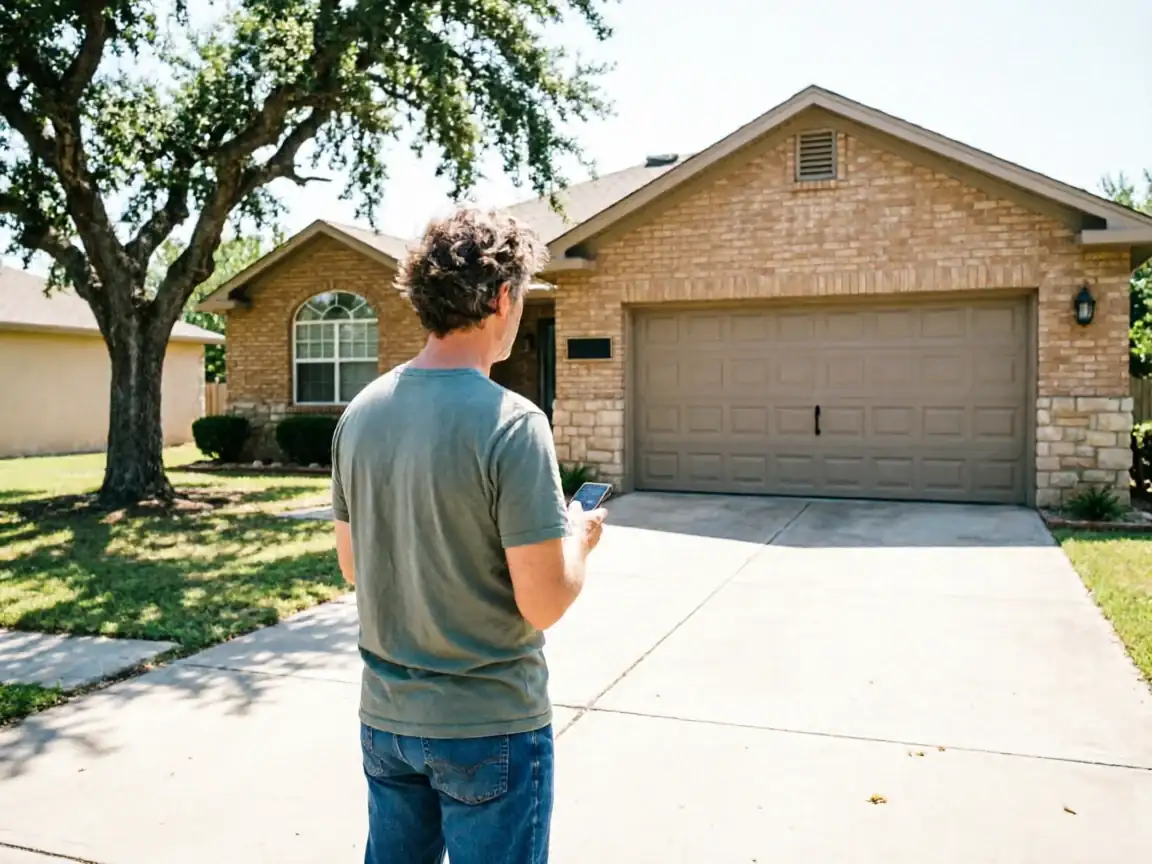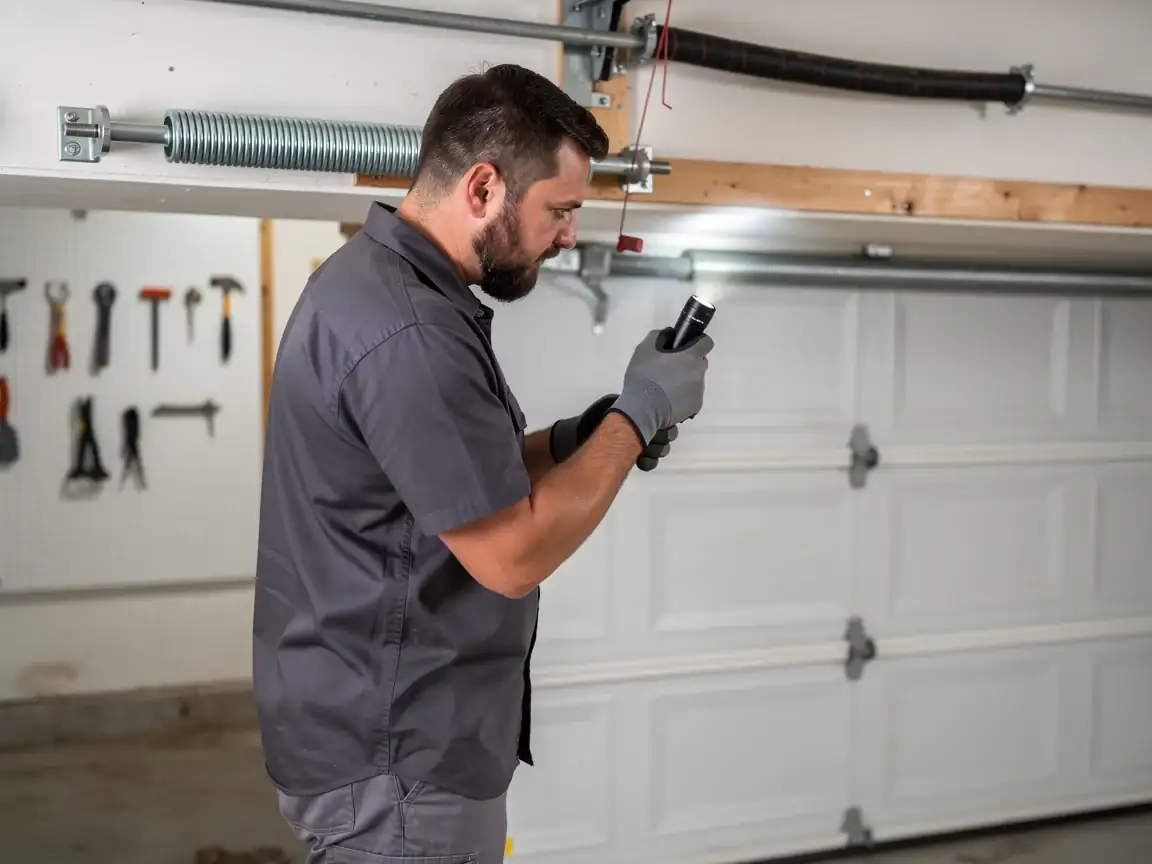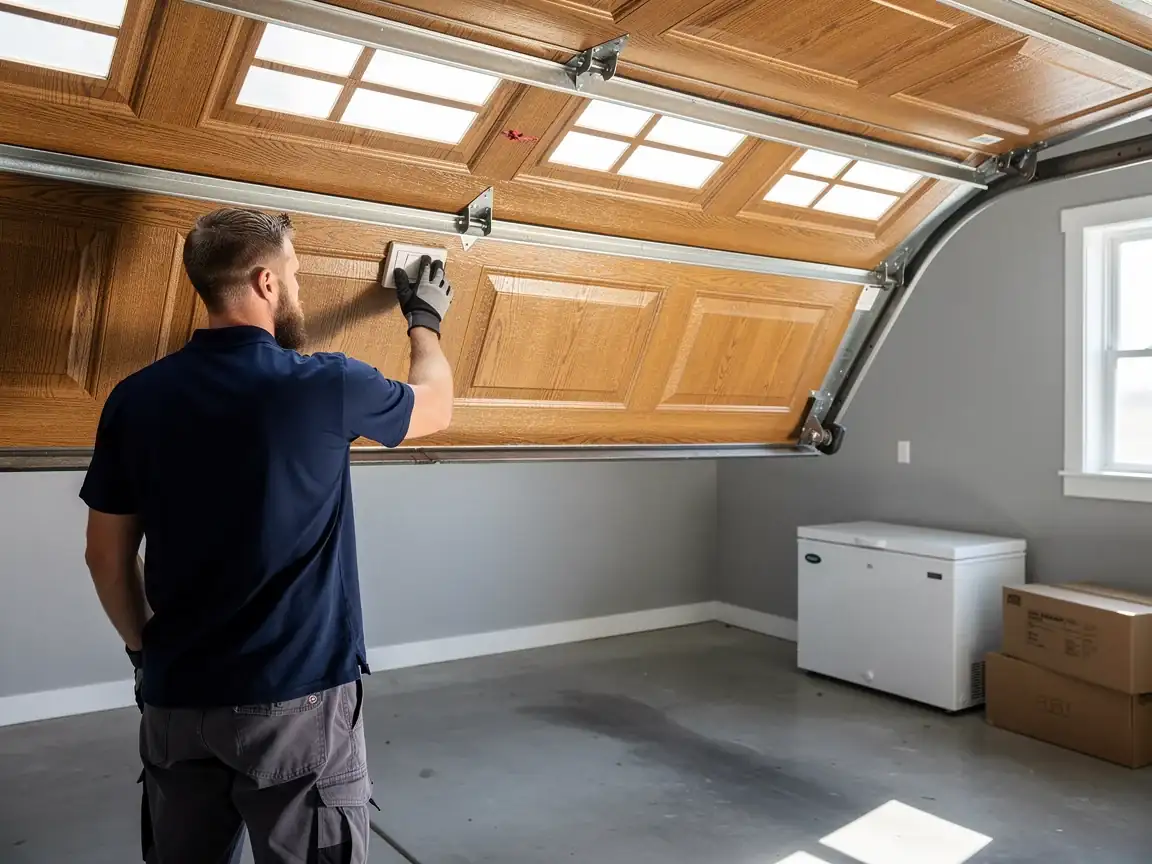
What Most People Get Wrong
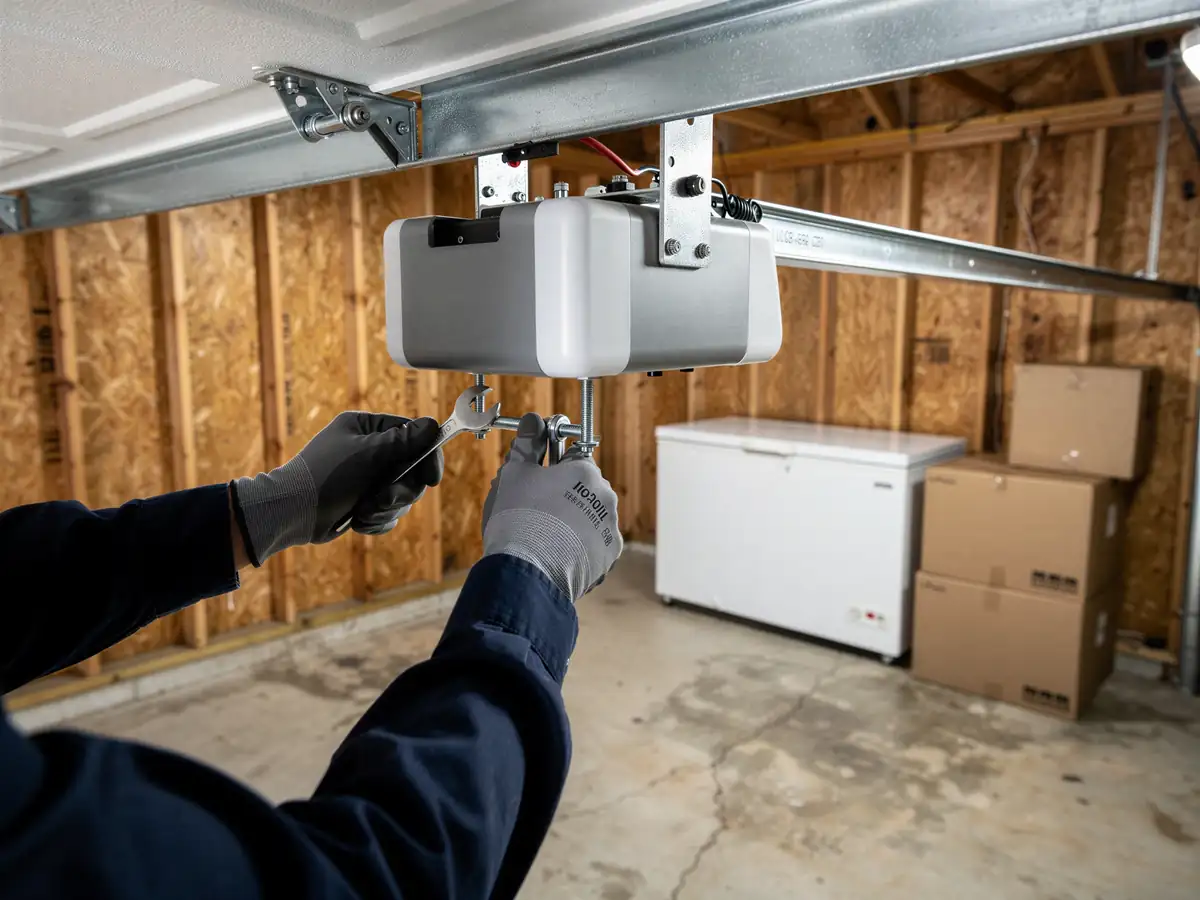
The usual assumption is that an opener that quits after a power blink just needs a reset. In Watauga, where housing runs 1953 to 2014 with a median build year of 1993, that assumption misses what's actually inside the unit. A house built around the median is now running an opener logic board that's pushing thirty years old if it hasn't been swapped. That board doesn't fail cleanly. It fails after a surge, then limps along, then fails again a month later on the next outage.
Owners in neighborhoods like often tell us the door "just stopped" the same week the power flickered. It's not coincidence. An old board loses its memory of the travel limits and safety sensor calibration the moment it loses power hard, and it doesn't always recover that memory on its own when the power comes back. People reset the wall switch, nothing happens, and they call it a dead motor when the motor is fine.
The other mistake is treating battery backup as optional because this isn't a hurricane or ice-storm market. It's not, but a short local outage still catches a door halfway open with nobody home, and a backup battery is cheap insurance against that specific failure, not against weather drama.
How Local Conditions Play In
Watauga sits in a moderate-heat climate band, not the kind of punishing summer that cooks a board in one season. But moderate heat sustained over twenty or thirty years of summers is exactly what shortens the life of the capacitors inside an opener's control board. Capacitors degrade faster with repeated heat cycling than with one bad month, and a garage that bakes most afternoons puts that cycling on every board in the neighborhood equally.
This matters most for the houses from the 1980s and 90s stock that makes up most of the area - those boards are already near the end of a normal service life, and heat-driven capacitor drift is what turns a flaky opener into one that drops out completely the next time the grid hiccups. A newer opener handles the same heat fine because the components are rated for more cycles up front.
We don't see ice-related failures here the way colder markets do, so if you've read advice about insulating torsion springs against freeze-up, it doesn't apply to this area. What does apply is a board that's spent three decades absorbing Texas summer heat finally giving out the next time the power drops.
What Is Going On
Across the roughly 45,309 owner-occupied houses in this service area
A large share went up in that same 1980s-90s window, which means a large share of garage openers are original or close to it. An opener installed when the house was built in, say, 1991 has already outlived its expected control-board life by a decade or more, even if the motor itself still turns.
- 45,309 owner-occupied
When the power cuts out hard
Not a slow brownout, but a full drop and restart - an aging board can lose its stored travel and force settings. The door may reverse at the wrong point, refuse to close past a certain height, or not respond to the remote at all until it's manually reprogrammed. On newer boards this is a non-event; on boards from that era it's often the failure that finally ends the unit's life.
We see this pattern repeat in the older sections near more than in newer construction further out toward Haslet or Westlake
Simply because the opener age tracks the house age. One honest limitation: if the board is original to a 1990s build, we generally don't recommend chasing parts for it. Boards that old are frequently discontinued, and a new opener outlasts a rebuilt one.
What It Costs
We can't give you a number here without seeing the unit - a chain-drive opener from the 1980s-90s stock that just needs its limits reprogrammed after a power cut is a different job than one with a cooked board that needs full replacement. What we can tell you is how to think about it: if the opener predates the mid-2000s and this is its second or third post-outage failure, repair money is usually better spent toward a new unit with battery backup built in.
Household income in this service area runs well above the regional median, and we mention that only because it changes the math on "repair vs. replace" - a battery-backup opener that prevents a stuck-open door during the next outage is a reasonable upgrade for a lot of the households here, not a luxury. For a door that otherwise runs fine, a straightforward board or sensor fix after a power event is a modest call-out, not a major job.
The one thing we won't do is quote a flat price over the phone before we've seen whether the fix is a reset, a part, or a full swap. Openers in homes from this era vary too much for that to be honest.